
Fire-Safe Landscaping in Templeton, CA
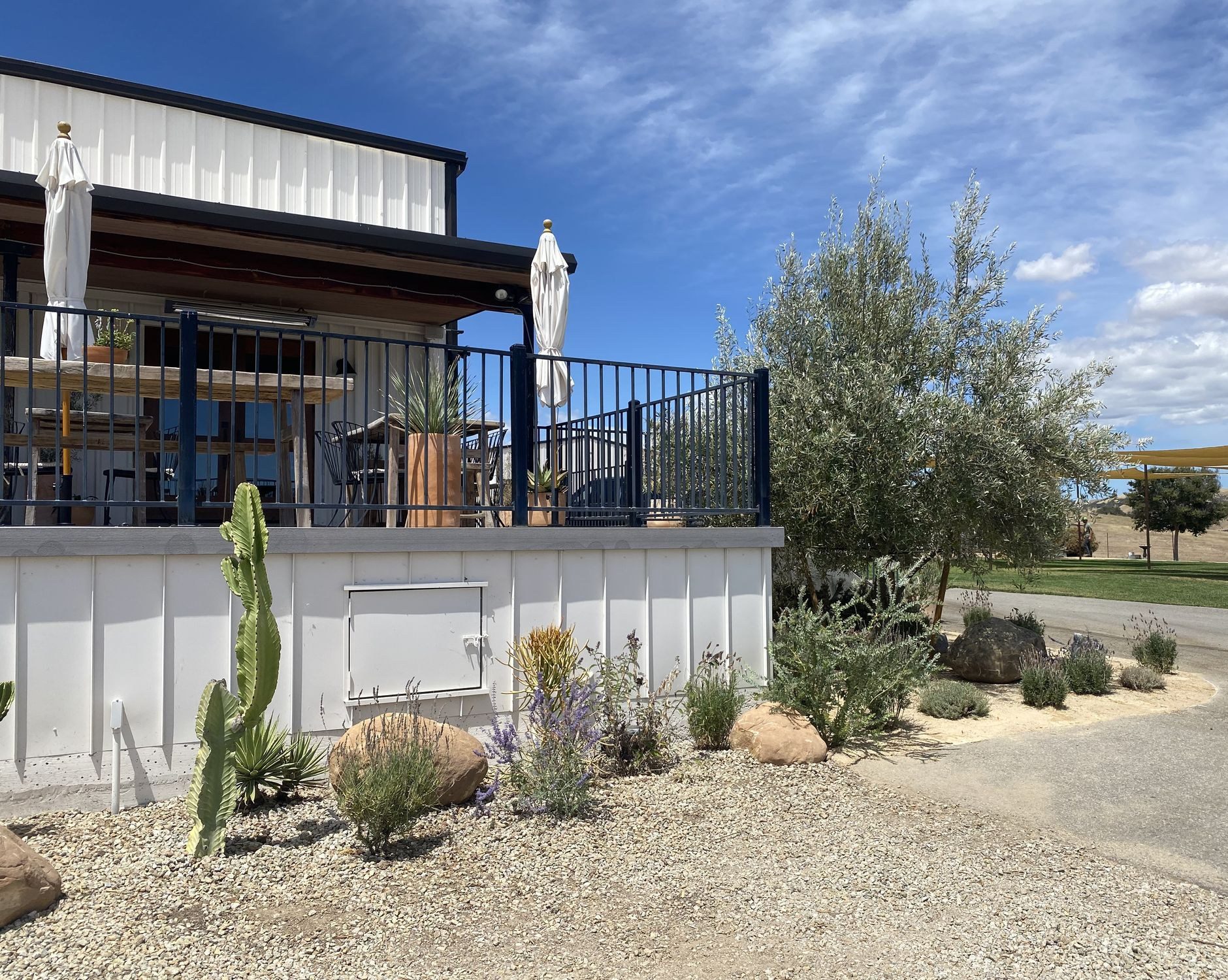
In Templeton, fire-safe landscaping is not a style choice. The Templeton Community Services District sets clearance rules every property owner has to meet each fire season. Paso Robles Landscaping builds yards that meet those rules and still look like a finished landscape: gravel and stone near the house, low-water planting spaced the right way, patios and paths that double as clear space, and layouts that make the yearly mowing simple.
The Templeton rules in plain numbers
Templeton is unincorporated, and inside the Templeton Community Services District boundary fire protection comes from Templeton Fire and Emergency Services, part of the District. Some rural lots with a Templeton address sit outside the District and follow County and state fire rules instead, so we confirm which applies at the first visit. The District’s weed abatement requirements set the minimum standards for every lot:
- Season: weed abatement must be maintained from May 1 through November 30.
- Around structures: firebreaks of at least 50 feet.
- Downslope from structures: at least 100 feet of clearance, because fire runs uphill toward the house.
- Oak trees: at least 30 feet of clearance around and under them.
- Perimeters and cross breaks: at least 30 feet wide.
- Mower height: no higher than three inches unless the Fire Chief sets a greater height.
- Road frontage: owners are responsible for weeds from the center line of the public road and across the whole property.
The District also notes that dead material has to be removed as part of abatement, that mowing should happen before 10 a.m. when it is below 80 degrees, and that mowers and other equipment need spark arresters plus a water extinguisher or back-pump sprayer on hand.
Small lots and big parcels
The rules split by lot size. Parcels of 3 acres or less must be mowed or disked completely. On parcels of 3 acres and larger, owners can mow or disk the whole property or, at a minimum, keep a soil firebreak around the perimeter with cross breaks that divide the land into blocks of no more than 1 acre, or as the Fire Department directs. For the larger Templeton properties with pasture or vineyard edges, we lay out the yard so the landscaped area and the firebreaks connect cleanly, which makes the yearly work faster and the inspection easier.
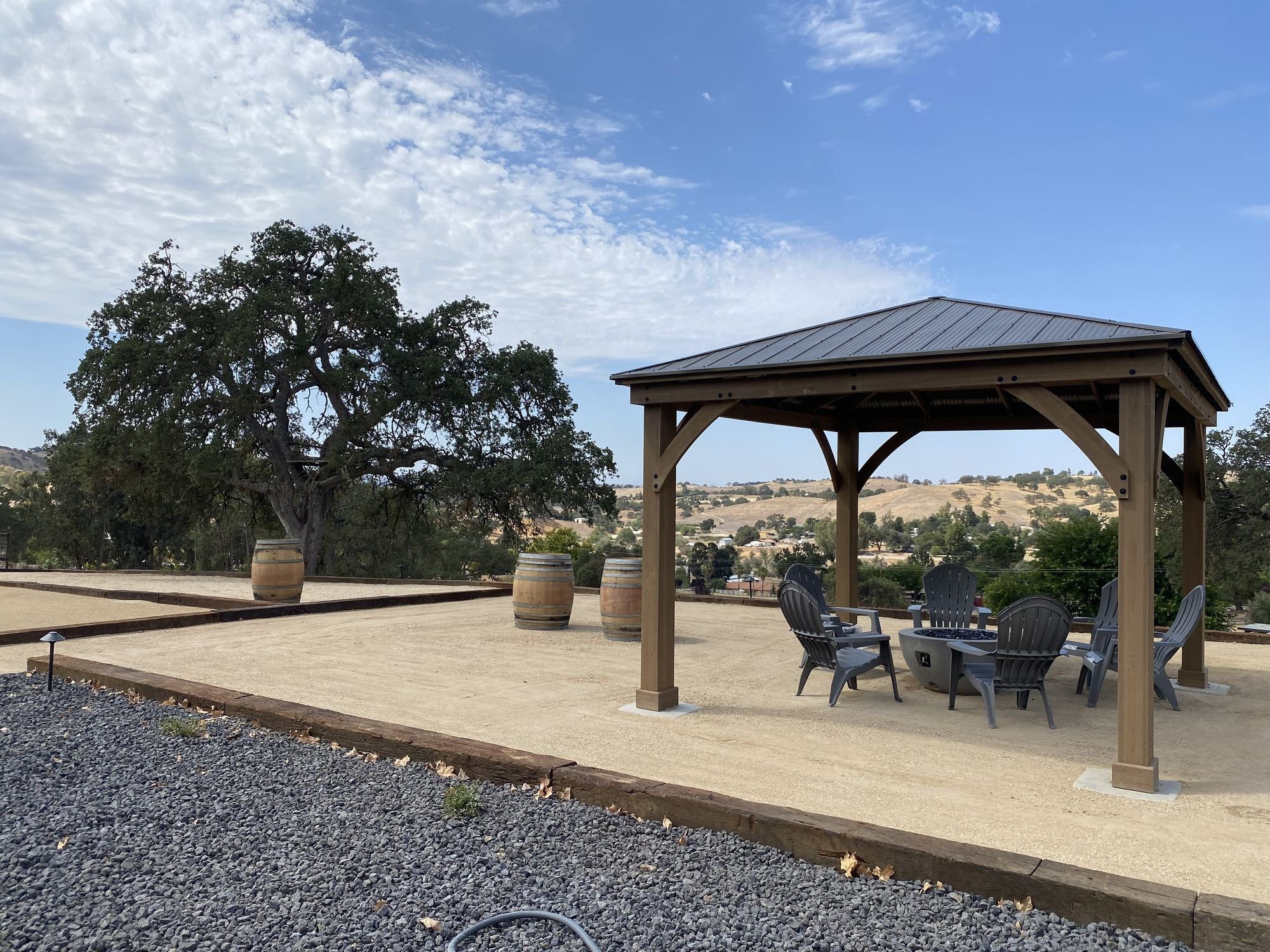
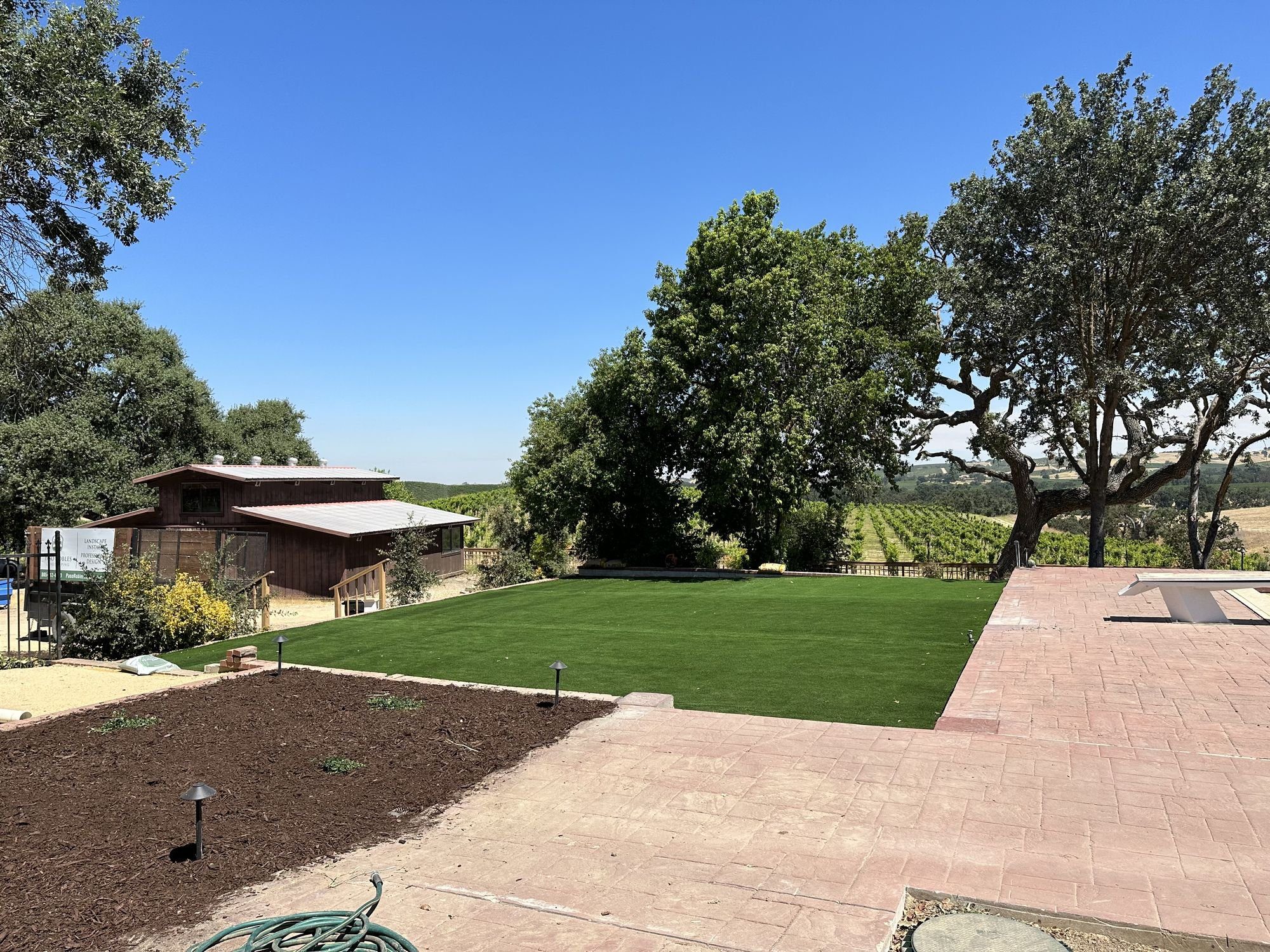
On an in-town lot, the clearance distances often reach past the yard itself. That is where design matters: patios, decomposed granite, turf and short mowed areas count as open ground, so a well-planned yard carries a lot of the clearance on its own.
Want a Templeton yard that is ready for fire season?
Designing the yard from the house out
- Right against the house: gravel, stone or hardscape instead of bark mulch, with nothing woody touching the walls, under decks or below windows. Firewood stays away from the house.
- Out to the clearance line: low-water plants in spaced groups with open ground between them, trees limbed up, and turf or mowed grass kept short.
- Downslope: the 100-foot clearance gets the most attention, since the slope below the house is where a grass fire would come from. Terraces, gravel and spaced shrubs keep it clear and stable.
- Under the oaks: the 30-foot clearance is about dry grass and brush, not the tree. We keep irrigation off the trunks, use gravel or leave clear ground under the canopy, and work outside the root zone where we can.
- Irrigation: drip on a smart controller so plants stay healthy without overwatering, and dead material does not pile up.
Decks, patio covers and new structures
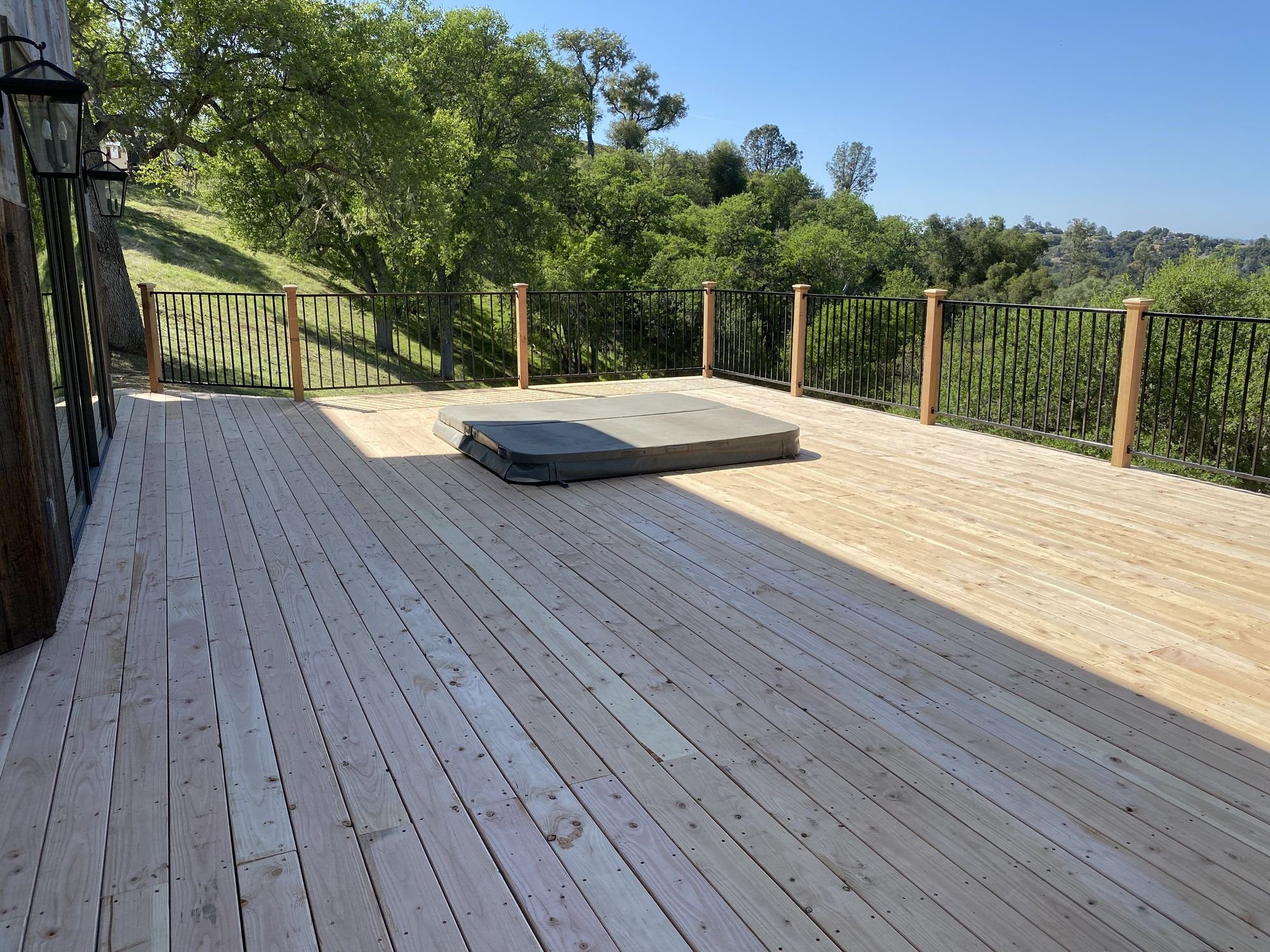
Many Templeton homes have a deck or covered patio facing the oaks or the hills, and that is where fire-safe landscaping and building rules meet. We keep the ground under and around decks clear and graveled, and use noncombustible surfaces right at the house. If the yard project includes a new structure or addition, Templeton Fire also reviews new construction. Its fire development review packet counts attached patio covers protected on three sides toward the floor area used for its sprinkler and fire flow rules, so we look at that before a cover is designed. The State Fire Marshal also published updated fire hazard severity zone maps, and higher zones bring stricter fire-safe construction rules, so we check the parcel early.
How a fire-safe yard project runs
- A site visit to walk the clearance distances, the slope and the oaks with you.
- A layout and written estimate that shows where the clear zones, hardscape and planting go.
- Brush, dead material and limb clearing, then grading and drainage.
- Hardscape, gravel and stone, then irrigation, planting, turf and lighting.
- A walkthrough of what to mow, when and how short before each May 1.
Related: fire-safe landscaping, fire-safe landscaping in Paso Robles, fire-safe landscaping in Atascadero, landscape design in Templeton, patios in Templeton, backyard remodels in Templeton, decks in Templeton and mulch and rock installation.
Building a new home or remodeling too? Our sister companies are Harrod Built, a family general contractor for custom homes and remodels, and Harrod Drafting & Design, which draws plans for custom homes, remodels and additions. One family can carry the house, the plans and the yard.
Common questions
When does weed abatement have to be done in Templeton?
The Templeton Community Services District says weed abatement must be maintained from May 1 through November 30. Lots are expected to be in compliance by May 1, and the District inspects for non-compliance in early May.
How much clearance do I need around my house in Templeton?
The District’s minimum standards call for firebreaks of at least 50 feet around structures, at least 100 feet of clearance downslope from structures, and at least 30 feet of clearance around and under oak trees. Firebreaks at property perimeters and cross breaks are at least 30 feet wide.
Do I have to mow my whole lot?
Parcels of 3 acres or less must be mowed or disked completely. Parcels of 3 acres and larger can be mowed or disked completely or, at minimum, have a soil firebreak around the perimeter and cross breaks dividing the land into blocks of no more than 1 acre, or as the Fire Department directs.
What happens if a lot is not cleared?
In the District’s 2026 schedule, properties were inspected May 2 to 7, the Board held a public hearing for non-compliant lots on June 16, and from June 17 the District’s contractor was authorized to clear non-compliant lots at the owner’s expense.
Can a fire-safe yard still look good?
Yes. Most of the work is placement: gravel, stone and hardscape closest to the house, open and well-spaced planting farther out, mowed grass kept short, and patios, paths and turf doing double duty as clear space. Done well, it reads as a finished landscape, not a cleared lot.