
Defensible Space and Zone 0 Landscaping in San Luis Obispo County
If your home backs onto grass, brush or oak woodland, the yard is part of your wildfire plan. Fire agencies divide the space around a home into three zones. The first five feet, called "Zone 0", matters most because that is where wind-blown embers land and ignite. California is finalizing new Zone 0 rules. They aren't in effect yet, but they're coming. Paso Robles Landscaping builds fire-smart yards across San Luis Obispo County with gravel and hardscape borders, lower-growing plant swaps, irrigation updates and cleanup, so the yard still looks good.
Call or text 805-712-4440 or send us a note for a free walk-through.
The three defensible space zones
CAL FIRE describes defensible space in three zones measured out from your home, attached deck and other structures:
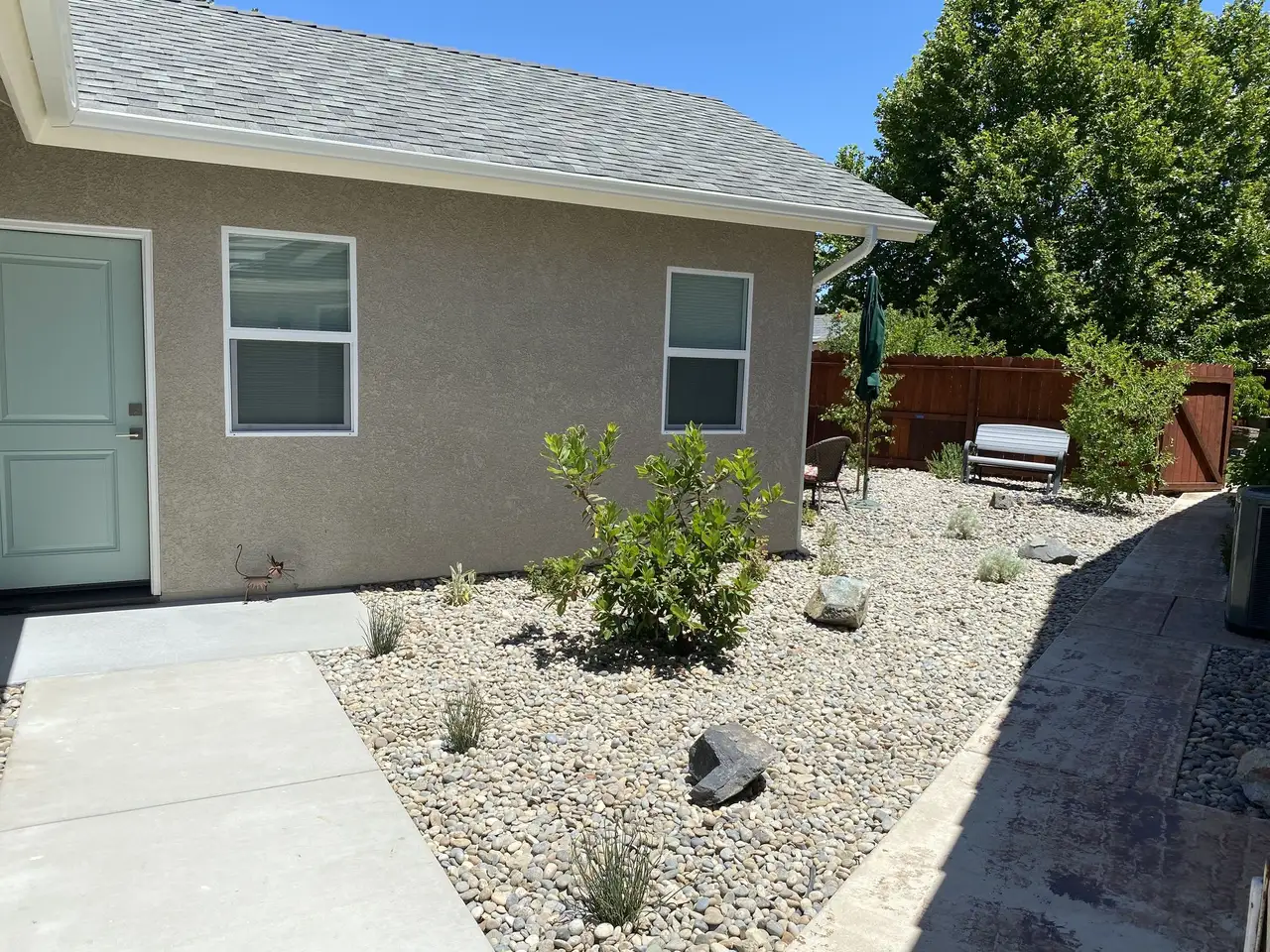
- Zone 0 (0 to 5 feet): ember-resistant. CAL FIRE's guidance: use hardscape like gravel, pavers or concrete, with no combustible bark or mulch. Remove dead plants, leaves and needles from the roof, gutters, deck and under the house. Keep branches 10 feet from chimneys. Replace combustible fencing, gates and arbors attached to the home with noncombustible alternatives.
- Zone 1 (5 to 30 feet): lean, clean and green. Remove dead plants, grass and weeds. Trim trees so branches stay at least 10 feet from other trees. Leave space between shrubs, trees and things that can burn, like patio furniture and wood piles.
- Zone 2 (30 to 100 feet or the property line): reduce fuel. Mow annual grass to 4 inches or less. Space shrubs and trees apart, both side to side and between the ground and the lowest branches. Keep 10 feet of clearance around wood piles, outbuildings and propane tanks.
Details, including spacing charts for slopes, are on CAL FIRE's defensible space page.
Zone 0 rules: where they stand (October 16, 2026)
- The law: California's defensible space law (Public Resources Code 4291) calls for an ember-resistant zone within 5 feet of structures, based on regulations from the State Board of Forestry and Fire Protection.
- The draft: the Board approved a final draft of the Zone 0 regulations on August 19, 2026.
- Not final yet: the package was submitted to the Office of Administrative Law and then withdrawn on September 8, 2026. The Board says it is still working with that office on a final review and will post an update when the regulation is published. Until then, Zone 0 is coming but is not in effect.
- Timing once adopted: under the statute, the requirement applies to new structures once the regulations and guidance are updated, and to existing structures three years after that. The Board's approved draft phases work in for existing homes over up to 5 years, with education first.
Follow the official status on the Board of Forestry's Zone 0 page, which also has its September 2026 Zone Zero Guidance Document.
What the approved draft would require (subject to change)
According to the Board's August 19, 2026 announcement, the draft:
- applies to homes in the State Responsibility Area and in Very High Fire Hazard Severity Zones in Local Responsibility Areas;
- allows no combustible materials such as bark mulch, wood chips, dead leaves or firewood within Zone 0;
- requires a vegetation-free, noncombustible "safety zone" right next to the home: at least 1 foot wide, or out to the edge of the eaves. It also keeps plants 2 feet from windows, doors and vents and 5 feet from attached decks;
- allows some well-maintained plants outside those buffers, such as spaced groupings of small non-woody plants, low ground covers, maintained lawn, and potted plants in movable noncombustible containers;
- allows trees if they are maintained: trimmed back from roofs, eaves and chimneys, with dead wood and ladder fuels removed;
- requires a 5-foot noncombustible section where a fence attaches to the home, and no new combustible fences or gates within Zone 0.
This is a summary of a draft, not legal advice. The final text could change, and local agencies can adopt equivalent or stricter standards.
What already applies in San Luis Obispo County
- State Responsibility Area (SRA): state law requires 100 feet of defensible space around structures, or to the property line.
- Unincorporated County areas served by County Fire (LRA): the County's 2025 hazard abatement ordinance requires defensible space within 100 feet of structures (or to the property line), removing dead vegetation and debris, clean roofs and gutters, and branches trimmed away from chimneys and structures. Parcels of one acre or more also need a 30-foot perimeter break with vegetation cut to 4 inches or less. Cities and community services districts set their own rules.
- Selling a home: in High or Very High Fire Hazard Severity Zones, sellers of homes built before 2020 need documentation of a compliant defensible space inspection (AB 38).
Look up your address on the CAL FIRE Fire Hazard Severity Zone viewer. Questions about local requirements go to San Luis Obispo County Fire or your city or district fire department.
How we help
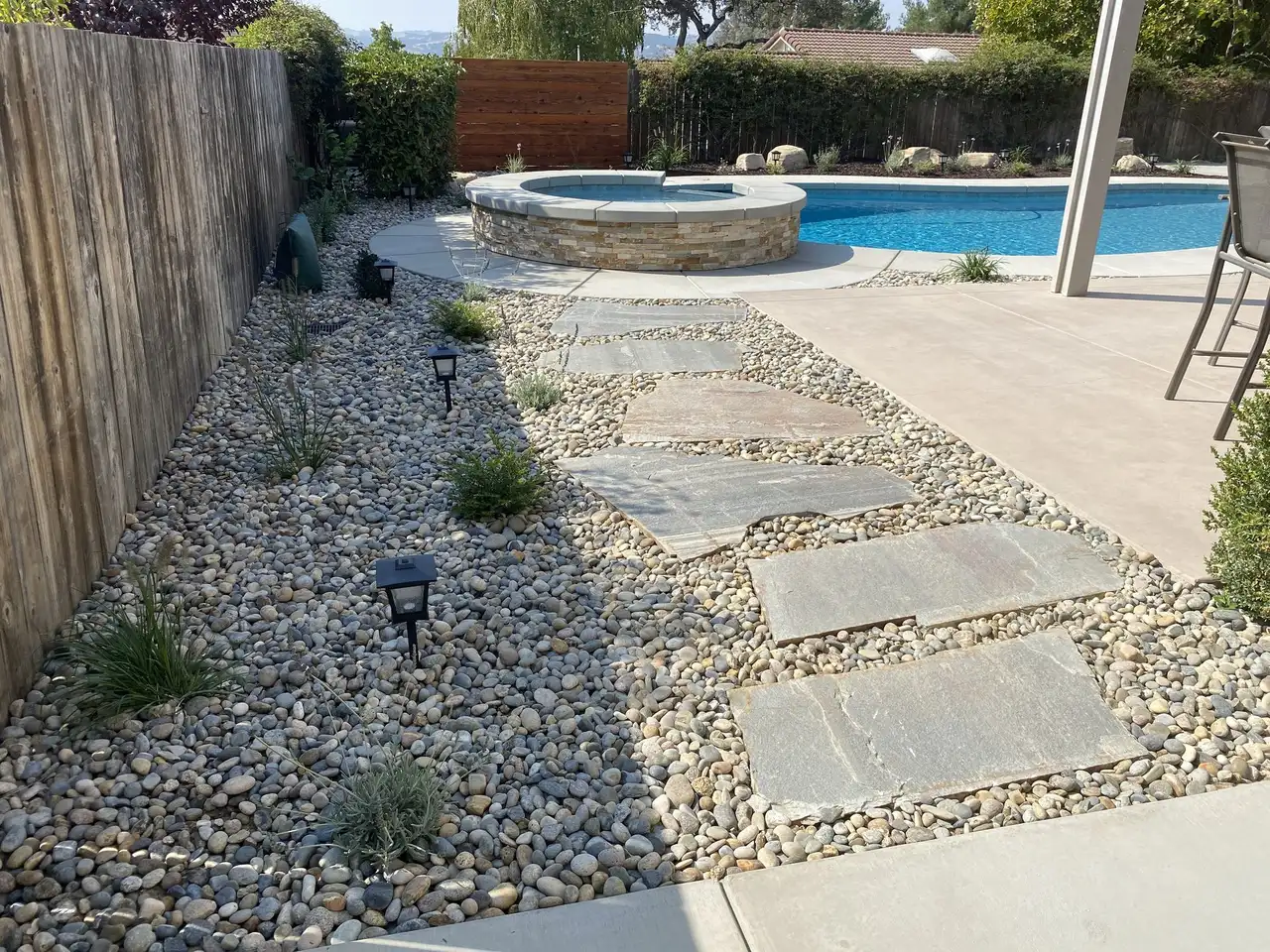
- Gravel and hardscape borders. We replace bark and dense shrubs in the first five feet with gravel, river rock, decomposed granite, pavers or concrete. See our hardscaping services and mulch and rock installation.
- Plant swaps. We take out dead, woody or crowded plants near the house. Then we replant farther out with lower-growing, well-spaced, irrigated plants, following water-wise design.
- Irrigation updates. We re-route drip and sprinklers after a redesign so the plants you keep stay healthy without watering the gravel zone.
- Cleanup near structures. We remove bark mulch, dead vegetation and debris from against walls, under decks and along fences, and haul it away.
- Zone 1 and 2 layout. We space new planting beds, paths and patios so the yard stays open and easy to maintain.
What we don't do: we're a landscape contractor, not a fire agency. We don't perform official defensible space inspections or certify compliance. Only CAL FIRE, San Luis Obispo County Fire or your local fire department can do that. We build to the published guidance and to any notes from your inspector.
Frequently asked questions
Is Zone 0 required right now?
Not yet. The Board approved a draft in August 2026, but it was withdrawn from state review on September 8, 2026, and has no effective date. The 100-foot defensible space rules and local ordinances already apply.
Do I have to remove every plant within five feet?
Not under the approved draft. It keeps a vegetation-free strip next to the house and allows some low, well-maintained plants beyond it. Watch the final rules.
Is bark mulch OK next to the house?
CAL FIRE's Zone 0 guidance says no combustible bark or mulch. Use gravel, pavers or concrete instead.
Will this pass my inspection or satisfy my insurer?
We can't promise that. Inspections are done by fire agencies, and insurers set their own requirements. Share any inspection notes or insurer letters with us and we'll build to them.
Get ahead of Zone 0
Free walk-through and estimate from a local, licensed contractor (CSLB #986950), serving San Luis Obispo County.