
Irrigation Systems in Nipomo
We install, repair and convert irrigation systems for Nipomo homes, whether on the Mesa or up in The Woodlands, Blacklake or Cypress Ridge: drip for shrubs and slopes, rotors for the lawn you keep, and controllers that adjust to the weather. Nipomo has no city government, so landscape water rules come from San Luis Obispo County, while the town’s main water supplier, the Nipomo Community Services District (NCSD), adds its own watering stages and backflow program. Every pipe, valve and head we install stays within your own lot.
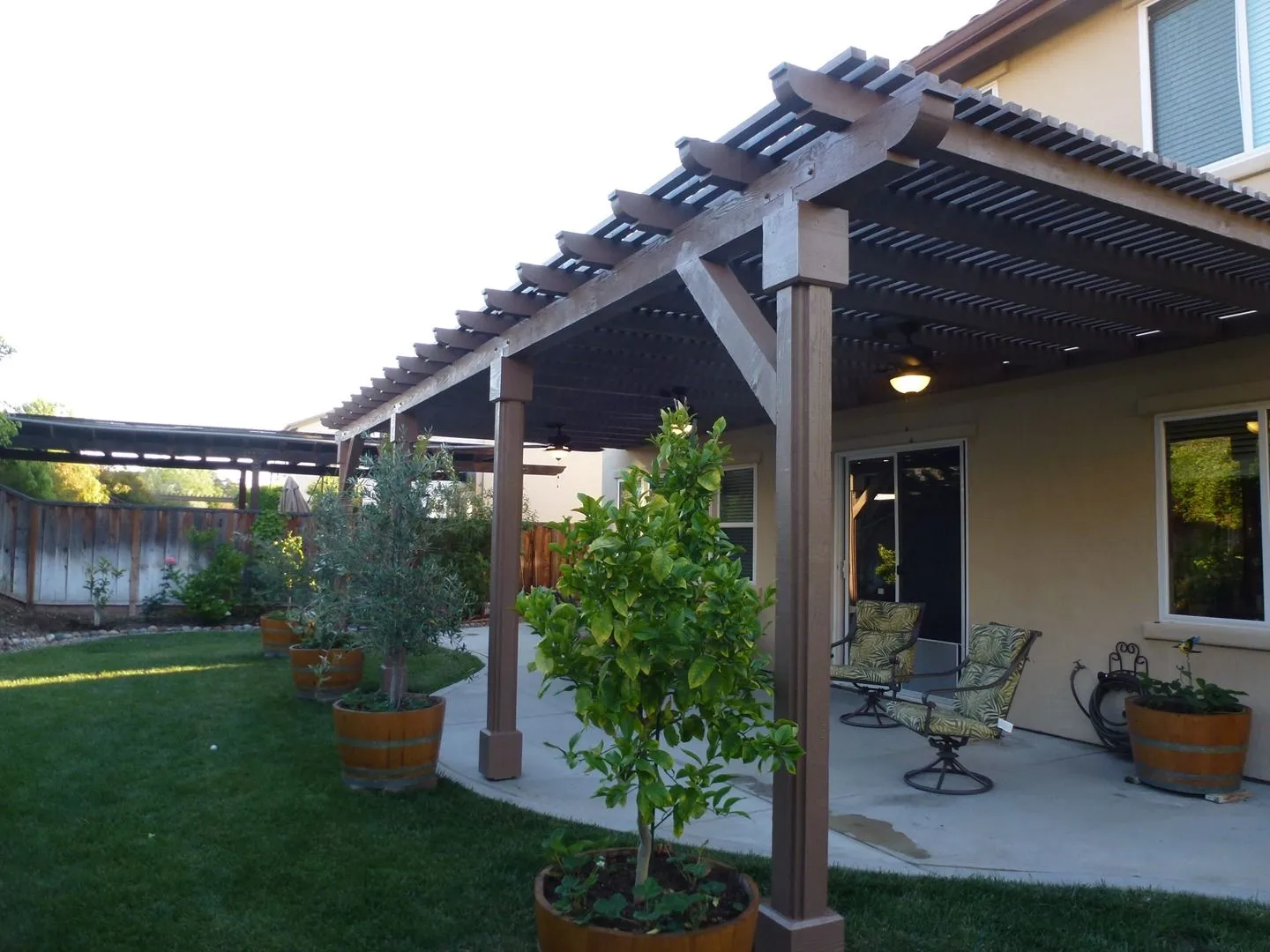
This page covers the water side of a Nipomo yard. Storm water and retention basins have their own guide, Nipomo yard drainage; for paving see Nipomo patio installation or driveways and walks in Nipomo, and for hillside terraces see Nipomo retaining walls. How we approach irrigation in general is on our irrigation page, and the nearest town page with its own water rules is irrigation in Arroyo Grande.
Nipomo Irrigation Rules at a Glance
We pulled every row below from a County or District document opened on October 28, 2026.
| Topic | What the document says | Where to read it |
|---|---|---|
| Is a sprinkler retrofit covered by the County landscape ordinance? | Only when the job is already going through a County permit or plan check and adds at least 500 square feet of irrigated landscape | County MWELO page |
| Small versus large landscapes | Up to 2,500 square feet can follow a prescriptive checklist; larger ones file a performance package and a third-party audit | County MWELO, 500 to 2,500 sq ft |
| Controller type | Self-adjusting from weather or soil sensors, tied to a rain shut-off, keeping its settings when power fails | County form LNG-1012 |
| Spray hours | Sprays run in the 8 p.m. to 10 a.m. window, or the supplier’s hours if those are tighter | LNG-1012, irrigation scheduling |
| Narrow strips | Planting areas under ten feet wide get subsurface watering or another method with no runoff or overspray | LNG-1012, item D.3 |
| Current District stage | The District’s drought page lists Stage II | NCSD drought page |
| Backflow | The District and County Environmental Health look for cross-connections; the District tells an owner if an assembly is needed and where | NCSD cross-connection page |
| Turf removal help | Cash for Grass incentives for owners inside the Mesa conservation zone, while money remains | County Cash for Grass |
Irrigation Work We Do in Nipomo
Most Nipomo jobs start with an old spray system that waters the sidewalk as much as the lawn. Here is what we are usually asked to build or fix:
- Drip and inline-emitter systems for shrub beds, slopes, raised vegetable boxes and new trees, with a filter and pressure regulator at each valve
- Rotor and rotary-nozzle zones for lawns that stay, laid out head to head so the turf gets even coverage without wetting the walk
- Weather-based or soil-moisture controllers with a rain sensor, mounted where you can reach them and programmed zone by zone
- Lawn-to-drip conversions: capping old spray heads, rerouting laterals and running drip to the new low-water planting
- Repair of leaking valves, broken laterals, sunken or tilted heads, and zones that run long because one line is cracked
- Seasonal check-ups where we run every zone, measure what it puts out and reset the schedule for the time of year
- A new irrigation tie-in on the house side of the water service, with a manual shut-off close to the connection
When the County Landscape Ordinance Applies
Back in 2015, Supervisors gave Title 19 (the County’s building code) a new Chapter 19.95, which pulls the State’s water-efficient landscape rules, known as MWELO, into County law by reference. The chapter is carried forward in Ordinance 3560, the County’s restatement of Title 19 that adopts the 2025 State codes. According to the County’s MWELO page, the ordinance reaches new development once landscaping hits 500 square feet, and smaller irrigated areas are exempt.
The trigger matters, and the County pages frame it around new development. Both County pages tie the ordinance to work that is already headed for a County permit or plan check. Replacing a few valves or converting beds to drip on an existing home usually needs none of those, so the ordinance does not reach it directly. A new home, or a new landscape that is part of a permitted project, is different, and then the County’s paperwork comes with the job. We use the same efficiency standards on simple retrofits anyway, because they are a sensible way to build a system that wastes little water.
Two Paths: Checklist or Full Package
- Landscapes of 2,500 square feet or less. The smaller-project page allows the prescriptive route, which means an information sheet, a site plan of the landscape, a list of plants and the plant and irrigation requirements before the permit issues, with completion paperwork due before final inspection.
- Landscapes larger than that. The larger-project page asks for the performance package: a water-budget worksheet, a soils report, planting and irrigation design sheets and a grading sheet if earthwork is involved. Before final, the owner turns in certificates of completion and installation, a maintenance schedule, and an irrigation audit by a third-party certified landscape irrigation auditor.
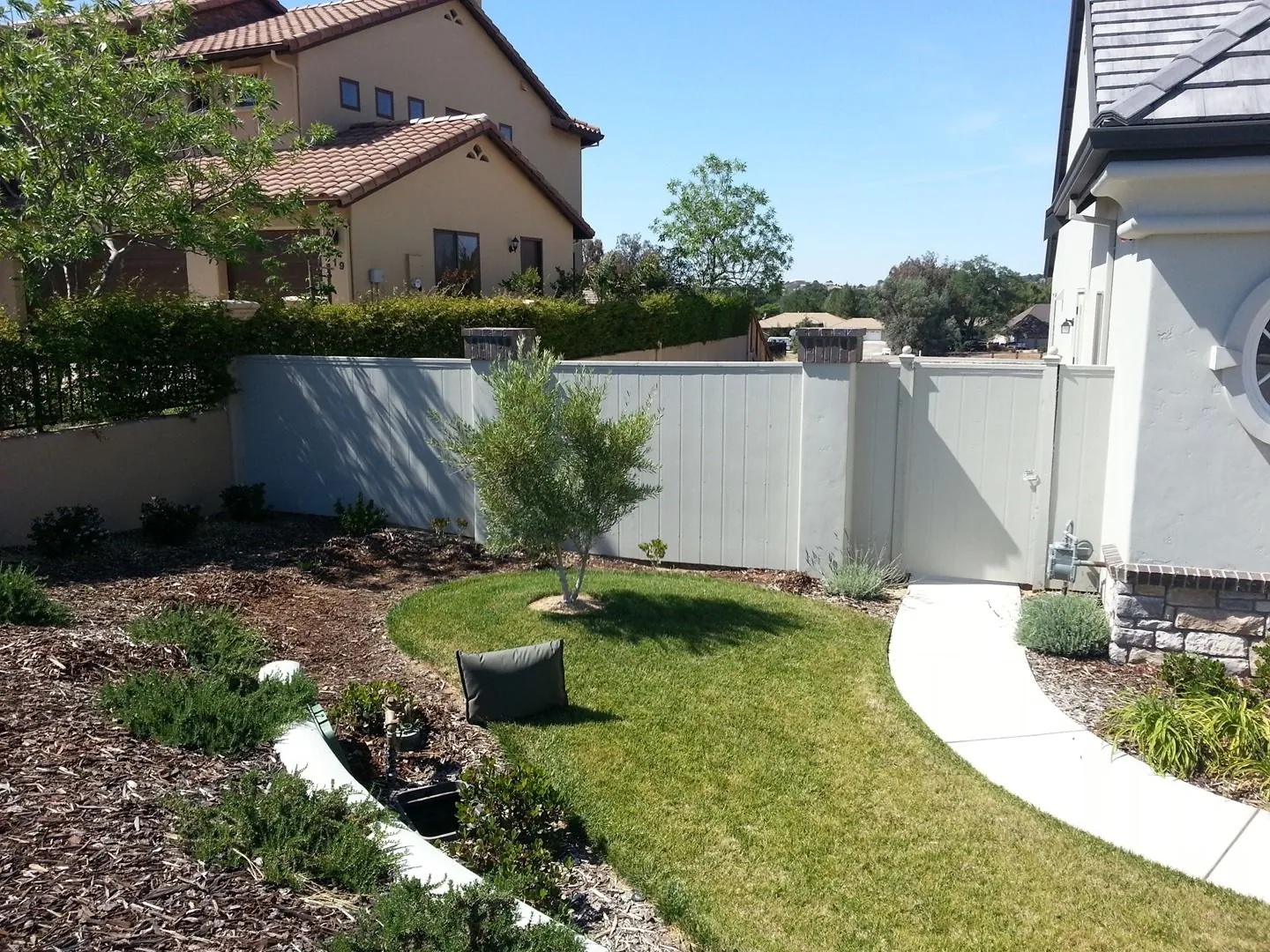
What the County Checklist Asks of the Hardware
County form LNG-1012 (the prescriptive compliance packet) gives the plainest picture of what a compliant residential system looks like. Its plant, soil and irrigation items read like a spec sheet:
- Plants. On residential projects, three quarters of the plant area (edibles excluded) goes to climate-adapted plants needing little or no summer water, with an average WUCOLS plant factor of 0.3.
- Soil and mulch. Four cubic yards of compost worked into each 1,000 square feet to six inches deep unless a soil test says otherwise, and a layer of mulch at least three inches thick over bare soil in planting areas.
- Turf. No more than a quarter of a residential landscape, none on slopes steeper than one foot of rise in four feet, none in parkways under ten feet wide (the form allows an exception beside a parking strip), and any parkway turf watered from below with no overspray.
- Controller. Automatic and driven by weather (evapotranspiration) or soil sensors, wired to a rain sensor, and able to remember its program after an outage.
- Pressure and shut-off. A pressure regulator holding the system inside the maker’s listed range, plus a hand-operated shut-off placed near where the system takes its water.
- Heads and emitters. Devices meeting the ASABE/ICC 802-2014 standard, with sprinkler heads documented at a low-quarter distribution uniformity of 0.65 or better.
- Narrow areas. Anything under ten feet wide in any direction watered by subsurface lines or another method that throws no water onto paving.
When final inspection comes, the owner receives completion and installation certificates, the watering program and a list of upkeep tasks. That maintenance list covers routine inspection and adjustment, clearing anything that blocks an emitter, replenishing mulch, and repairing parts with the original components or more efficient ones. We leave a printed copy of the schedule at the controller on every system we hand over.
Watering Hours: County Form and District Code
Under the County form, spray and rotor watering belongs in the 8 p.m. to 10 a.m. window unless the weather makes that impossible, and where a water supplier sets tighter hours, those tighter hours control. It also expects each station’s schedule to account for run time, the number of cycle starts needed to avoid runoff, soil type, slope, shade, root depth and plant type.
NCSD’s own rules live in District Code Chapter 3.08, which lets the Board call conservation stages by resolution. Measures the District may require in Stage I include fixing plumbing and irrigation leaks at once, watering in the evening and before mid-morning, keeping irrigation minimal, checking systems periodically and not letting water run off. The second stage tacks on spa and pool covers and a ban on hosing driveways, walks, decks and walls. After its Board checked spring groundwater readings in June 2024, NCSD posted on its drought page that the District is now in Stage II. The code’s later stages go much further: Stage III can switch off automated irrigation and limit watering to what keeps trees and shrubs alive, and Stage IV can bar District water for outdoor use altogether.
So on a Nipomo controller we set spray zones to finish before mid-morning, split long run times into short cycles so sandy soil can soak the water in, and give drip zones their own programs. We also show owners how to drop to tree-and-shrub watering only, in case the District ever moves to a higher stage.
Backflow and the District’s Cross-Connection Program
An irrigation line connected to drinking water is a classic cross-connection: if pressure drops in the main, water sitting in a buried lateral can be pulled back toward the meter. NCSD’s cross-connection page explains the two ways that happens, back-pressure and back-siphonage, and describes the three main devices: an air gap, a double check valve assembly and a reduced pressure principle assembly.
- Who decides. The District works with County Environmental Health to find actual or potential cross-connections on each property, and an owner who needs an assembly is notified with the type and the location.
- Irrigation services. District Code 3.06.060 requires a reduced pressure principle assembly at the meter on all irrigation services, and Code 3.02.030 requires multi-family, commercial and institutional parcels to have a separate irrigation connection with backflow protection. Most single-family homes water from the house line instead.
- Testing. Under Code 3.06.110 the customer arranges an annual test by a certified tester, and an assembly that fails must be repaired and retested within the District’s deadline.
Our part is the private system downstream. We build the irrigation tie-in on the house side, include the shut-off the County form asks for, and when the District has required a particular assembly, we lay out the valves around it so it stays reachable for testing. We leave the meter and everything on the street side of it to the District.
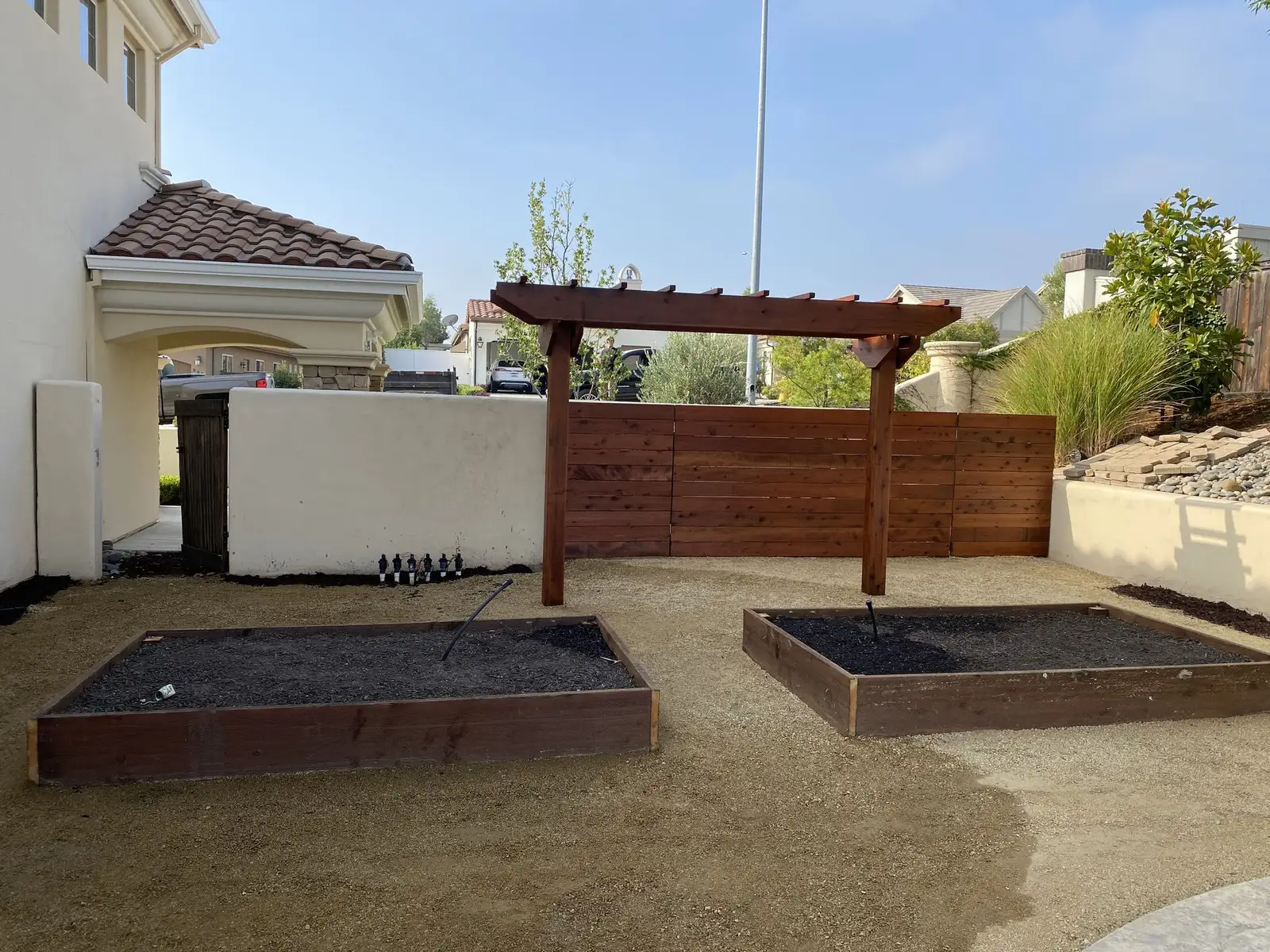
The Nipomo Mesa Water Conservation Area
A large share of the Mesa falls inside a County-mapped conservation zone, the Nipomo Mesa Water Conservation Area, run under the Countywide Water Conservation Program. The County’s conservation area page says programs there aim to keep water demand neutral by offsetting new construction at a one-to-one ratio. The new construction page adds that new structures in the area, including homes, guest houses and pools, need offset credits before the construction permit issues, while additions, replacement dwellings and expansions of existing structures do not.
Offset money pays for the Cash for Grass program: owners inside the conservation zone who qualify can be paid to tear out watered lawn and put in plants and groundcover from the County’s low-water list. The County says incentives go first come, first served while funding lasts, and applications include signed terms, a planting plan and photos of the existing lawn. Anyone planning to apply should do so while the lawn is still in place; we can supply the planting plan and the photos, and we hold off on cutting sod until you have heard back from the County. Incentive amounts change, so we leave those to the County.
How We Lay Out a Nipomo System
The Mesa’s sandy soil (a 2004 County drainage report traces the Mesa back to prehistoric dunes) takes water fast and lets it drain past the roots just as fast. That shapes our layouts:
- Hydrozones. Lawn, shrubs, trees and vegetables each get their own valve, because their needs are nothing alike.
- Short cycles. Sand drains quickly, so several short starts beat one long run, which is the same cycle-and-soak idea the County form points to.
- Drip with filters and regulators. Every drip valve gets a filter and a pressure regulator, and emitter lines are laid to the root zone, not just at the trunk.
- Heads away from paving. Spray patterns are matched so no head throws onto the driveway, the patio or the street.
- Mulch on top. A thick mulch layer slows evaporation from sand, and the County form calls for at least three inches on bare planting soil.
NCSD’s conservation tips page recommends two habits we teach every client: read the meter before and after an irrigation cycle to see exactly what a zone uses, and run a simple sprinkler output test before setting a schedule. The District’s sustainable landscapes page also points residents to the UC Master Gardener program for free plant and pest advice.
Keeping Trenches Clean
When an irrigation job is part of a permitted project, the County’s construction stormwater page expects an erosion and sediment control plan with the permit application and controls kept in place all year. On every job, permitted or not, we backfill trenches the same day where we can, keep spoil piles off the driveway and away from gutters, and sweep the street edge clean before we leave.
We Stay Inside the Property Line
Everything we install runs from the house-side tie-in to the last emitter, inside your lot. Work in the County road right-of-way requires an encroachment permit from Public Works, and parkway strips and meter boxes in the street are outside what we build. Where a lateral needs to run near a side or rear boundary, we confirm the line from a survey, not from an old fence.
Call Before Trenching
According to the CSLB’s regional notification center page, an excavator has to contact the center ahead of digging, which lets each utility come out and paint its lines. Irrigation trenches are shallow but long, and they cross gas, electric and cable runs all the time, so 811 gets a call ahead of each trench and we switch to hand tools near the paint. To look up a contractor’s license (ours too), use the CSLB’s hire a contractor page.
From First Visit to Final Walk-Through
- Look at the old system. We run every zone, mark broken heads, leaks and overspray, read the meter, and find the shut-off and the controller.
- Check the rules. Is a permit already involved, how much landscape area is new, is the lot in the conservation area, has the District flagged a backflow assembly, and is Cash for Grass worth applying for first?
- Draw the zones. A plan with hydrozones, valve locations, head and emitter types, pipe routes and the controller, sized to the pressure at your tie-in.
- Install. Trench, lay pipe, set valves and filters, flush lines, set heads and emitters, and backfill.
- Program and hand over. We set the schedule for the season and the current District stage, test every zone with you, and leave the schedule and maintenance list at the controller.
Who to Call in Nipomo
- County Planning and Building (landscape ordinance, conservation area, construction permits): 805-781-5600.
- NCSD (water service, stages, backflow notices): 148 S. Wilson Street, Nipomo; 805-929-1133.
- County Public Works (right-of-way permits): 805-781-5252.
- Before any trench: call 811.
Paso Robles Landscaping holds CSLB #986950 (B and C-27), and our irrigation work stays inside the client’s lot. The summary above reflects County, NCSD and CSLB material as posted on October 28, 2026, offered as homeowner background only; it is not legal advice or an engineer’s opinion, and it does not speak for any public agency. Each property’s requirements are set by County staff and the District, stages and rules get revised, and if staff tell us something different from a posted document, staff win and we request their answer in writing.
Related Nipomo and Irrigation Pages
More reading for a Nipomo yard:
- Landscaping in Nipomo
- Landscaping for Blacklake, Cypress Ridge and The Woodlands
- Nipomo drainage and basins
- Nipomo patios
- Nipomo retaining walls
- Nipomo driveways and walks
- Outdoor living in Nipomo
- Irrigation in Arroyo Grande
- Irrigation in Pismo Beach
- Irrigation in Morro Bay
- Irrigation in Grover Beach
- Our irrigation services
- Lawn replacement programs
Every town we cover is listed on our areas page.
Replacing a Nipomo lawn with turf? See artificial turf in Nipomo.
Comparing towns? Our watering rules by town in SLO County page lays out every local water supplier’s current hours, days and rain rules side by side.
Frequently Asked Questions
Do I need a County permit to redo my sprinklers in Nipomo?
Usually not for a straight retrofit on an existing home. The County’s landscape ordinance kicks in when a job already needs a County permit or plan check and adds at least 500 square feet of irrigated landscape. New homes and landscapes tied to a construction permit follow its checklist or full package.
What watering hours apply under NCSD rules?
The District is at Stage II, and its Stage I measures, which carry into Stage II, include watering in the evening and early morning and avoiding runoff. The County landscape form sets an 8 p.m. to 10 a.m. window for overhead watering and says the stricter of the County and supplier hours applies.
Will I need a backflow device for my irrigation?
It depends on the property. NCSD and County Environmental Health look for cross-connections, and the District notifies owners who need an assembly, naming the type and location. Separate irrigation services need a reduced pressure principle assembly at the meter, and any assembly must be tested every year by a certified tester.
Can I get help paying to remove my lawn?
Possibly. Owners inside the Mesa conservation zone may qualify for the County’s Cash for Grass incentive for swapping watered lawn for listed low-water plants. Money goes out in order of application while it lasts, and the application asks for photos of the lawn as it is now, so we suggest applying and hearing back before any turf comes out; we can prepare the planting plan and photos.
Is drip a good choice on Nipomo’s sandy soil?
Yes, with the right layout. Sand drains quickly, so we run drip on its own valves with filters and pressure regulators, place emitters across the root zone, schedule several short cycles, and cover the soil with thick mulch. The County form also requires drip or subsurface watering in strips under ten feet wide.
Want a Nipomo Irrigation System That Wastes Less?
Send a few photos of your yard and controller. We come out, run your zones, check the County and District rules for your lot, and follow up with a written proposal.
Call 805-712-4440 Discuss Your Project
Paso Robles Landscaping · 1345 Riverside Ave, Paso Robles · Licensed contractor, CSLB #986950 · Serving all of San Luis Obispo County
Related: pool decks in Nipomo.