
Irrigation Systems in Pismo Beach
From the Pismo Heights hillsides to the blufftop streets of Shell Beach, we design, install and repair home irrigation: drip under mulch for beds and slopes, low-angle rotary nozzles where overhead water still makes sense, and smart controllers that react to the weather. The City of Pismo Beach both supplies the water and writes the rules for using it outdoors, from landscape standards in the municipal code to fixed hours when sprinklers must stay off. Every line we lay runs on the owner’s side of the lot line.
This page is about getting water to plants. Moving storm water off a lot is a separate subject, handled in Pismo Beach yard drainage; paving and outdoor rooms are on patios in Pismo Beach, and slope terraces are on Pismo Beach retaining walls. Our general approach lives on the irrigation services page, and two neighbors with different water suppliers have their own guides: Arroyo Grande irrigation and Nipomo irrigation.
Pismo Beach Watering Rules in Brief
Each row below comes from a City or State page we opened on October 30, 2026.
| Question | What the source says | Source |
|---|---|---|
| Does the landscape ordinance cover my project? | Permitted new projects whose landscape tops 500 square feet, plus renovations of existing landscapes bigger than 2,500 square feet | Municipal Code 15.48.010 |
| Can I plant a new lawn? | New irrigated turf is barred for all development as of May 18, 2022, until the City repeals that subsection; synthetic turf is fine if water can drain through it | 15.48.010, subsection C |
| When must sprinklers stay off? | Between ten in the morning and four in the afternoon, and during rain plus the 48 hours after a measurable storm | City water conservation page |
| Runoff | Water flowing onto neighbors, walks, streets or gutters is prohibited | Rule A |
| Overhead hours on permitted landscapes | Spray and rotor watering belongs in the evening-to-morning block that ends at ten | City performance package, Section I |
| Present supply condition | Normal Water Supply | City water conservation page |
| Where the City’s backflow duty stops | At the customer’s property line, or ahead of the first above-ground isolation valve when the device sits in City right-of-way | Public Works FAQ |
| Help with turf removal and controllers | Cash for Grass and a smart controller rebate, each with terms on its application form | Incentive programs page |
What We Build and Fix in Pismo Beach
A typical call starts with a clock nobody has reprogrammed in years and heads that mist the driveway on a breezy morning. The work usually falls into these groups:
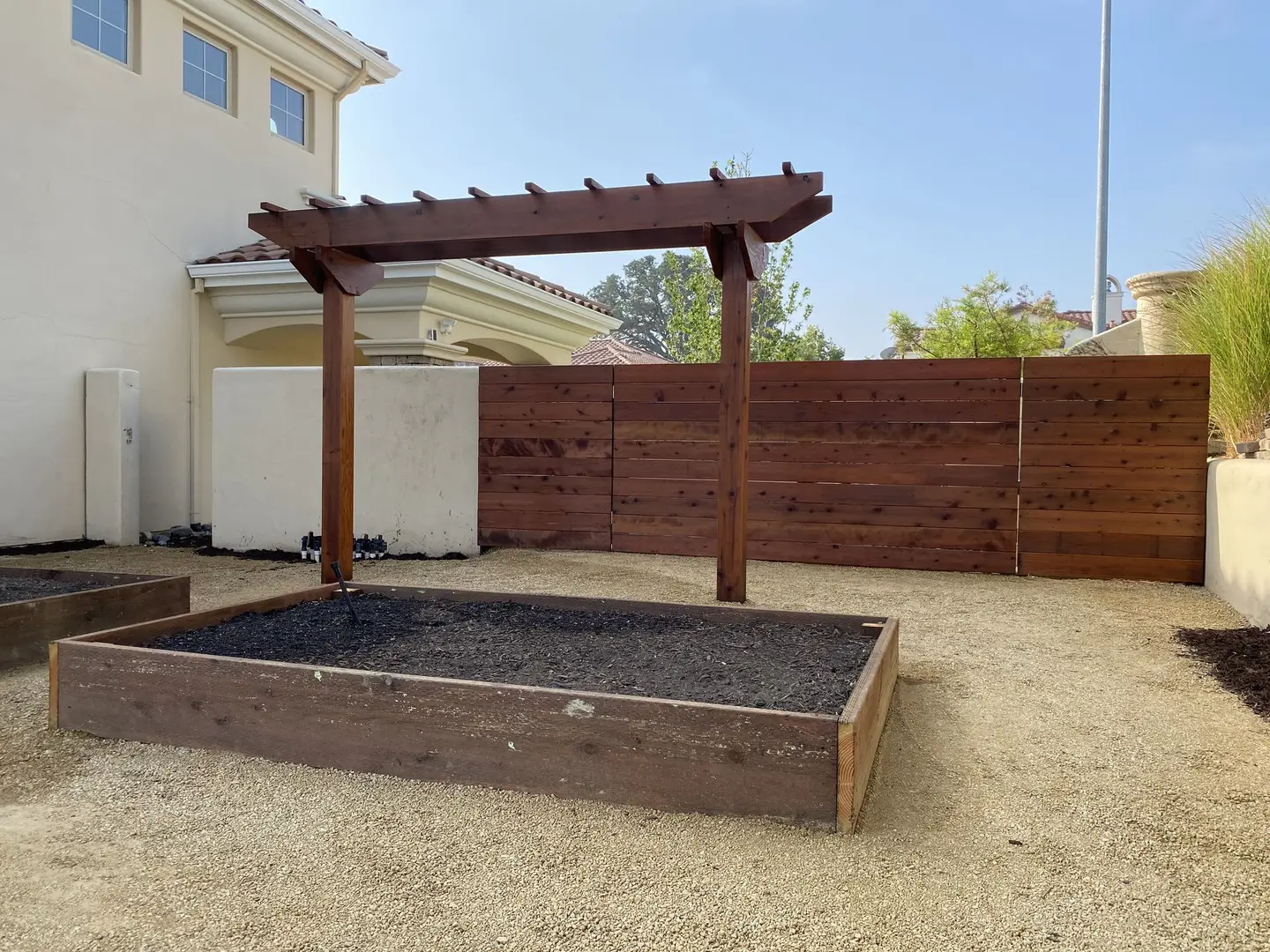
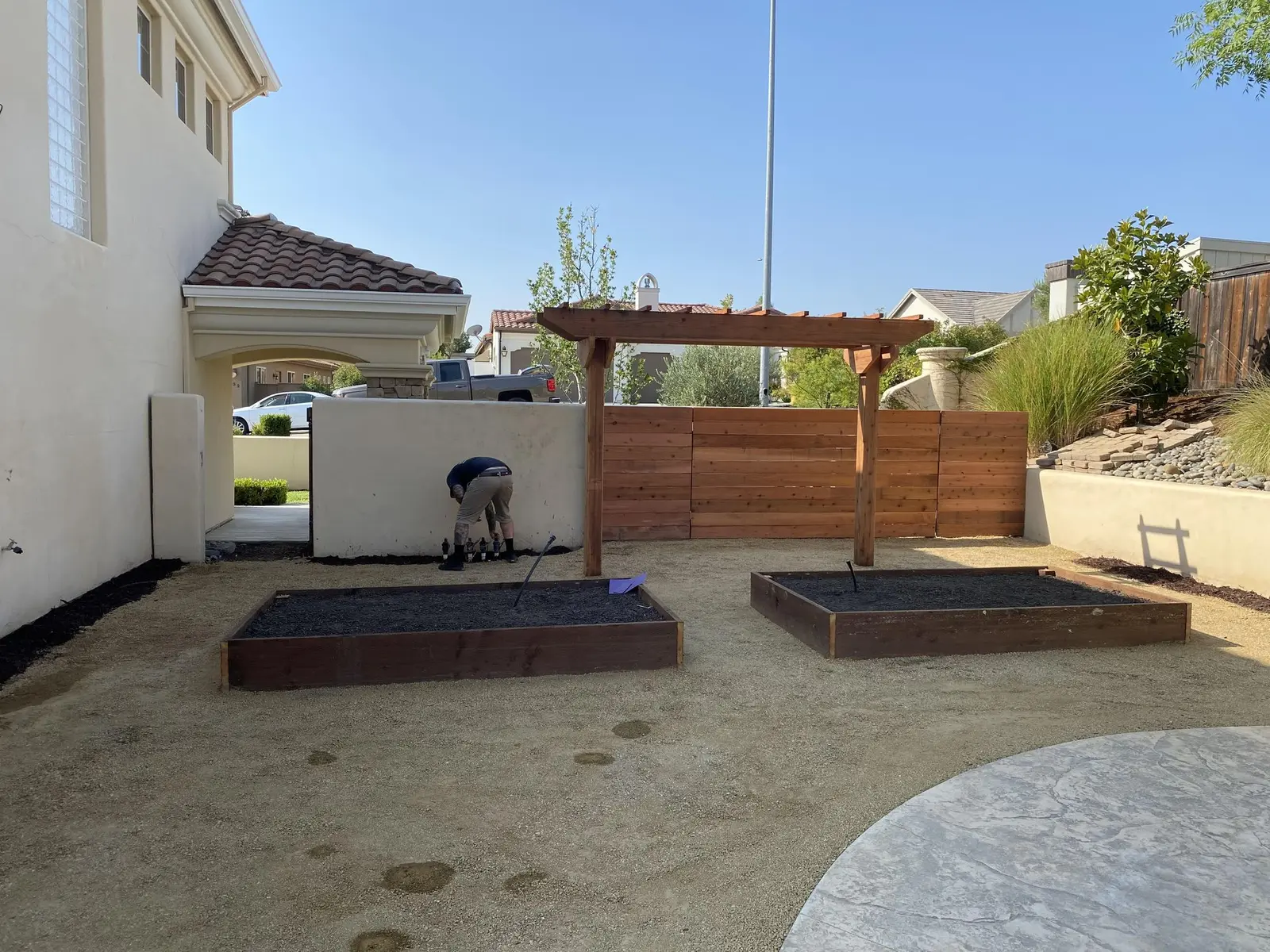
- Drip grids and inline tubing under mulch for shrub borders, raised vegetable boxes, slopes and young trees, each valve fitted with its own screen filter and regulator
- Low-angle rotary nozzles on the planted areas that still need overhead water, spaced so each head reaches the next and none of them throws onto paving
- Weather-driven or soil-moisture controllers paired with a rain shut-off, programmed one station at a time for the season
- Turning a thirsty lawn into a low-water garden: old spray bodies capped, laterals re-plumbed, drip run out to the new plants
- Tracking down the slow leak behind a high bill, then replacing weeping valves, split lines and broken or buried heads
- Twice-a-year tune-ups where each station runs while we watch, nozzles get cleaned or swapped and the clock is reset
- A new point of connection for the garden on the owner’s side of the meter, with a hand shut-off and the backflow protection the tie-in calls for
The City’s Landscape Ordinance and When It Applies
Chapter 15.48 of the Pismo Beach Municipal Code adopts California’s model landscape water ordinance, known as MWELO, by reference, so the State text, as amended, becomes the City’s own landscape standard. The State’s Department of Water Resources explains on its MWELO page that every local agency has to enforce either that model or a local version at least as effective, and that the newest amendments took effect January 2, 2025.
Section 15.48.010 names who must comply: owners and their designers on a new home or other new project needing a City permit or plan check with a landscape area above 500 square feet, and anyone rehabilitating an existing landscape larger than 2,500 square feet. Those projects must meet the MWELO sections the code lists, including the compost and mulch requirements. A swap of valves and heads on an established yard that needs no City permit generally falls outside those triggers. The second threshold catches a large renovation, though, so on a big lot we confirm with the City before work starts instead of guessing.
Lawns Under the Turf Prohibition
Subsection C goes further than the State model. As of May 18, 2022, new irrigated turf is prohibited for all development, and the prohibition stays until the City repeals it based on local drought conditions. Artificial turf that lets water infiltrate the soil is permitted for any landscape the code requires. In practice, when a Pismo Beach project includes a new landscape, we plan play areas with artificial turf or groundcover and save live grass for lawns that already exist.

Prescriptive Form or Full Package
- Aggregate landscape between 500 and 2,500 square feet. The City’s prescriptive compliance form applies. Before the permit issues, it asks for a project information sheet, a landscape site plan and a plant list, plus a short checklist covering plants, compost, mulch, turf and the watering system.
- Bigger than that, or a smaller project that opts in. The performance-based package asks for a water budget, planting, irrigation and grading design sheets, a soil management report, and, when the work is done, an audit carried out by an independent auditor certified in landscape irrigation.
The performance package also lists what the MWELO does not cover, among them vegetable gardens, vineyards and small orchards, so a backyard food garden on its own is outside the paperwork even though we still put it on drip.
Hardware the City Checklist Expects
Read as a spec sheet, the prescriptive form’s items describe a well-built residential system:
- Planting. Three quarters of the residential plant area (edibles aside) in climate-adapted species needing only occasional summer water or none, with an average WUCOLS factor of 0.3.
- Soil. Compost tilled in at four cubic yards per thousand square feet to a six-inch depth, unless soil testing points another way, then three inches of mulch over exposed soil in the beds.
- Turf limits. The form caps residential turf at a quarter of the landscape and keeps it off slopes steeper than one in four; with the City’s turf prohibition in force, new projects simply leave irrigated grass out.
- Controller. Automatic, driven by evapotranspiration or soil-moisture readings, wired to a rain sensor, and holding its program if the power drops.
- Regulation and isolation. Regulators that hold dynamic pressure inside the maker’s range, and a gate, ball or butterfly valve placed right next to the point of connection.
- Emission devices. Sprinklers and emitters meeting ASABE/ICC 802-2014, and sprinkler heads documented at 0.65 or better for low-quarter distribution uniformity.
- Narrow spaces. Strips narrower than ten feet in any direction get subsurface irrigation or some other approach that keeps water from spraying past or running off.
- Submeter. On residential sites, a private landscape submeter once irrigated area reaches 5,000 square feet.
At final inspection the applicant hands the owner and the City a certificate of completion, a certificate of installation, the irrigation schedule and a landscape and irrigation maintenance schedule. We tape a copy of the schedule inside the controller door so the next person to touch it knows what each station does.
Watering Hours and Runoff
The City’s water conservation page lists the rules in force under its Normal Water Supply condition. Outdoor irrigation is off limits from 10 a.m. to 4 p.m., no landscape may be watered during measurable rain or for 48 hours afterward, water may not run onto neighboring lots, walks, roadways or gutters, and decorative fountains must recirculate. For landscapes built under the ordinance, the performance package confines overhead watering to the hours from eight at night until ten the next morning and asks that each station’s schedule weigh run time, how many starts it takes to keep water from running off, the soil, root depth and slope.
So we set spray and rotary stations to run overnight and wrap up well before ten, which satisfies both sets of rules. Drip stations get their own programs outside the midday block. Every controller we install has a rain sensor wired in, and we show owners how to suspend watering after a storm so the 48-hour rule takes no effort to follow.
Backflow and Cross-Connections
Article I of Municipal Code Chapter 13.08 exists to keep anything on a private lot from flowing back into the public water system. Its definitions name lawn sprinkling systems as a plumbing hazard when they lack a vacuum breaker, air gap or other protection, and they treat the owner of the premises as the consumer. The same section describes the air gap, the double check assembly and the reduced pressure principle device, and says the testable assemblies must be readily accessible for maintenance and testing.
The Public Works FAQ draws the service line between City and owner: City upkeep of a water service ends at the meter, with the customer responsible for the line beyond it, and its responsibility for service laterals feeding backflow devices ends at the property line, or before the first above-ground isolation valve when the device stands in the right-of-way. We work entirely on the private side. Our tie-ins carry the protection the connection calls for, assemblies stay where a certified tester can reach them, and the meter and anything in the street are left to the City.
Designing for the Coast
Pismo Beach yards range from sandy lots near the water to heavier soils on the hills, and onshore wind is part of most afternoons. The City’s conservation tips line up with how we design here:
- Match the cycle to the soil. The tips call for short, more frequent runs on sandy soil and deep, less frequent runs on clay, so we set station by station after a quick look at each bed.
- Stay out of the wind. The City advises against watering when it is windy or at midday; overnight starts and low-angle nozzles keep water on the plants.
- Favor drip and mulch. Both are on the City list. Drip under mulch also keeps salt-laden spray off leaves and leaves no wet paving near the house.
- Watch the hidden heads. Night watering means a broken head can go unnoticed, so the tips suggest checking the system regularly; we add a quick daytime test run to each tune-up.
- Keep water away from bluff edges. On blufftop lots we keep stations light near the edge and avoid soaking the setback, and anything about surface runoff goes to the drainage plan.

Leaks, Water Audits and Lawn Removal
The City suggests checking for leaks at the meter: with all water turned off in the house, any movement of the small leak indicator on the dial points to a leak somewhere downstream. City staff will also come out for a water audit covering bills, indoor and outdoor plumbing and suggested repairs, booked at 805-773-7054. We often start a retrofit from that audit’s findings.
For owners ready to give up grass, the City’s incentive programs page describes Cash for Grass, which pays toward lawns swapped for drought-tolerant planting, where the new planting must run on drip or micro spray tied to an automatic timer. A separate smart controller rebate covers weather-based controllers named on that page, and other models can be put to the City Engineer for approval before purchase. Amounts and conditions are set by the City and listed on each application form, so read those terms before any sod comes out; we can draw up the planting and drip layout the application calls for.
Trenches, Dirt and Storm Drains
On the City’s stormwater page, construction projects disturbing less than an acre are expected to use the minimum erosion and sediment controls set out in a Water Pollution Control Plan. Irrigation trenches are small, but we treat them the same way: spoil kept on tarps or in the planting area, trenches closed the day they are dug when possible, and the gutter swept before we go.
The Property Line Is Where We Stop
The Applications and Permits page requires an encroachment permit for any work in a City right-of-way or easement. Parkway sprinklers, street-side meter boxes and anything under the sidewalk are outside our work. When a pipe has to hug a side or back boundary, we work from survey markers rather than trusting where a fence happens to stand.
Utility Marking and License Checks
According to the CSLB page on regional notification centers, anyone excavating must contact the center first so utilities can mark their lines. Sprinkler trenches may not go deep, yet they cross most of a yard, so we call 811 before each one and dig by hand near the marks. Any contractor’s license, ours included, can be looked up through the CSLB consumer pages.
How an Irrigation Job Runs
- Walk the system. We run each station, flag leaks, misting and dry spots, note the controller and find the main shut-off.
- Sort out the rules. Does the job already involve a City permit, how large is the new or rehabilitated area, does the turf prohibition touch the plan, and is a rebate worth applying for first?
- Lay out the stations. Hydrozones, valve manifolds, head and emitter choices, pipe routes and controller location, matched to the flow and pressure available where we connect.
- Install and flush. Trench, pipe, valves, filters and regulators, then flush every line before heads and emitters go on.
- Program and walk through. Schedules set outside the 10-to-4 block, every station run with you watching, and the maintenance list left at the controller.
Pismo Beach Contacts
- Engineering Division (water conservation, encroachments): 760 Mattie Road, 805-773-7456.
- Public Works (water conservation and Garden Wise questions): 805-773-4656.
- Water audit appointments: 805-773-7054.
- Before digging: call 811.
We hold CSLB #986950 (B and C-27) and keep its irrigation work within the client’s property. What you read here summarizes City of Pismo Beach, State Department of Water Resources and CSLB material as we found it on October 30, 2026. Treat it as homeowner background; it is not a legal or engineering opinion, and the City has not approved it. City staff decide what applies to each lot, rules and supply conditions change, and when staff guidance differs from a posted page we follow staff and ask for the answer in writing.
Further Reading for Pismo Beach Yards
Other guides that fit with this one:
- Landscape design in Pismo Beach
- Shell Beach landscaping
- Outdoor living on Shell Beach bluff lots
- Pismo Beach patios
- Pismo Beach drainage
- Pismo Beach retaining walls
- Pismo Beach driveways and walks
- Irrigation in Arroyo Grande
- Irrigation in Nipomo
- Irrigation in Morro Bay
- Irrigation in Grover Beach
- How we approach irrigation
- Rebates for replacing a lawn
For the full list of towns, open our service area page.
Comparing towns? Our watering rules by town in SLO County page lays out every local water supplier’s current hours, days and rain rules side by side.
Frequently Asked Questions
Do I need a City permit to replace my sprinklers in Pismo Beach?
Usually not for a like-for-like retrofit on an existing yard. City landscape rules kick in for new work that already needs a permit and adds more than 500 square feet of planting, or for a redo of an existing landscape bigger than 2,500 square feet. Large renovations are worth confirming with the City first.
What hours can I water in Pismo Beach?
Outside 10 a.m. to 4 p.m. City rules also bar watering during measurable rain and for 48 hours afterward, and no runoff onto walks, streets or neighbors. Landscapes built under the ordinance schedule overhead watering between 8 p.m. and 10 a.m.
Is new grass allowed in Pismo Beach yards?
Not watered grass, for now. Under the municipal code, development starting May 18, 2022 may not add irrigated turf until the City repeals that rule. Permeable artificial turf is allowed, and existing lawns can stay.
Who is responsible for the backflow device on my irrigation line?
The owner. City code treats the property owner as the consumer and lists unprotected lawn sprinkler systems as a plumbing hazard, and the Public Works FAQ says the City’s responsibility ends at the property line. We build the private tie-in with its protection and keep any testable assembly easy to reach.
Will the City help pay to remove my lawn?
It may. The City offers Cash for Grass for lawns replaced with drought-tolerant planting on drip or micro spray with an automatic timer, plus a smart controller rebate. The terms are on each application form, so read them before removing turf.
Ready for an Irrigation System That Fits Pismo Beach Rules?
Send us a few photos of the yard and the controller. We visit, run every station, look up the City rules that touch your property, and email a written proposal.
Call 805-712-4440 Discuss Your Project
Paso Robles Landscaping · 1345 Riverside Ave, Paso Robles · Licensed contractor, CSLB #986950 · Serving all of San Luis Obispo County