
Yard Drainage in Arroyo Grande
In Arroyo Grande we fix yards that pond, wash out or dump roof water against the house. Our crews pipe downspouts out to planting, lower beds so they catch water, build rain gardens and cobble swales, swap sealed paving for permeable surfaces, and cover raw slopes before storms. The goal is the one the City sets out in its stormwater handouts: keep rain on the lot, away from foundations, and out of the gutter. Call 805-712-4440 or send the contact form to set up a walk-through, ideally while the yard still shows where the last storm went.
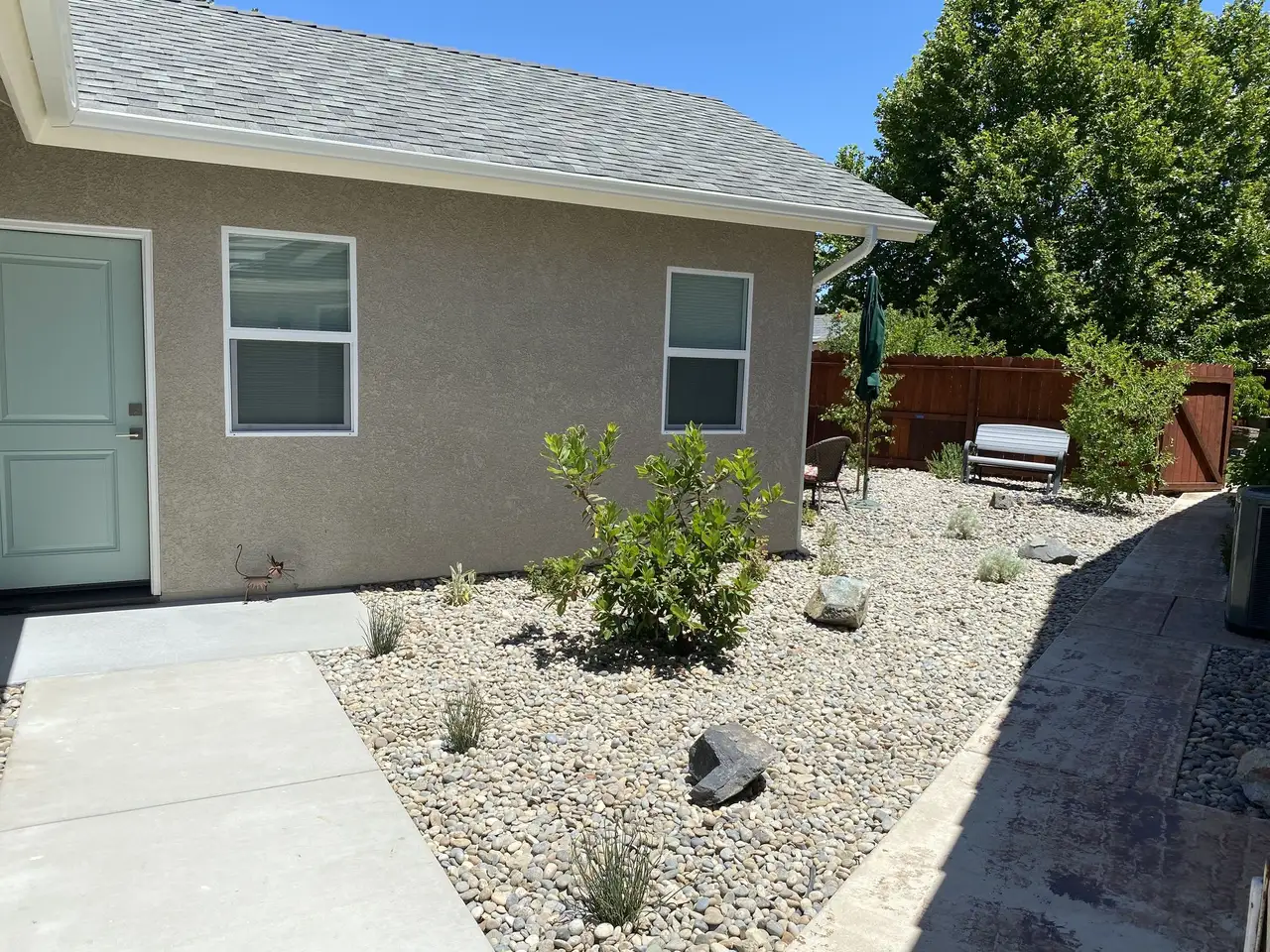
Arroyo Grande Drainage Rules in One Table
| Topic | What the City says | Checked Oct 15, 2026 |
|---|---|---|
| Roof and driveway water | Direct downspout and driveway runoff at least 10 feet from foundations, toward beds and lawns where it can soak in | PR1 site design checklist |
| When a stormwater plan applies | Projects that create or replace 2,500 sq ft or more of impervious surface are regulated; smaller ones file a PCR Waiver Request Form | Stormwater Plan Application |
| Tiers for a house lot | PR1 site design at 2,500 sq ft; runoff retention at 15,000; peak management at 22,500 (the treatment tier does not apply to a single-family home) | Stormwater Plan Application |
| Permeable paving | Left out of the impervious total only when it is designed to infiltrate | City post-construction page |
| Grading permit | Earthwork over 50 cubic yards in total, or over 20 cubic yards that alters a drainage way or watercourse | Chapter 13.24 grading ordinance |
| Creek setbacks | No impermeable surfaces: 35 ft from Arroyo Grande and Tally Ho creeks, 50 ft from Meadow Creek, 25 ft from other creeks and drainages | City creek care guide |
| Gutter runoff | Excessive gutter runoff is prohibited; sweep driveways and patios instead of hosing them | City water conservation page |
Where Arroyo Grande Rain Ends Up
The City’s stormwater outreach page explains that many local storm drains empty directly or indirectly into Arroyo Grande Creek and on to the ocean with no treatment. The street gutter is not a sewer. Whatever rides along with yard water, from fertilizer and loose soil to pet waste and pool water, goes straight to the creek.
The City’s creek care guidebook describes a 152-square-mile watershed that starts in the Santa Lucia foothills, passes Lopez Dam, and is fed by three main tributaries: Corbett (Tally Ho), Tar Springs and Los Berros creeks. It also makes the point that roofs, drives and patios do not let rain soak in, so more paving means more flooding, more erosion and less groundwater recharge downstream. Local creek flows are described as flashy: water arrives fast and leaves fast. A yard drainage plan here is part house protection and part creek protection.
Signs a Yard Needs Work
- Splash marks, efflorescence or damp stucco right where a downspout lets go
- A side yard or patio corner that stays soggy for days after a storm
- Silt fanning across the walk or the sidewalk below a planted bank
- Mulch and bark floating into the gutter after every heavy rain
- Planters built up higher than the slab, so water sits against the wall
- Sprinkler water still trickling down the curb long after the cycle ends
- Runoff from an uphill lot crossing the property line with nowhere to go
What We Build to Move or Hold Water
Most jobs combine a few of these. We walk the property, look at roof outlets, grades, soil and what the neighbors send downhill, then draw a simple plan before digging.
- Downspout leaders run in solid pipe to a planted bed or lawn at least 10 feet out from the foundation
- Planting beds set slightly below the surrounding grade so they hold rain and sprinkler water instead of shedding it
- Rain gardens and vegetated swales filled with amended soil and native or low-water plants
- Cobble-lined dry streambeds that slow a concentrated flow and spread it out
- Permeable pavers, gravel and decomposed granite where a sealed slab would send water to the street
- Regrading so soil next to the house falls away from walls, slabs and crawlspace vents
- Rain barrel and cistern hookups with an overflow line aimed at planting, not at the neighbor
- Mulch, jute netting and plantings on bare slopes that would otherwise shed silt onto walks and gutters
- Low walls with drain rock and weep outlets where a cut bank meets a patio
- Sprinkler and drip fixes that stop overspray from running down the driveway
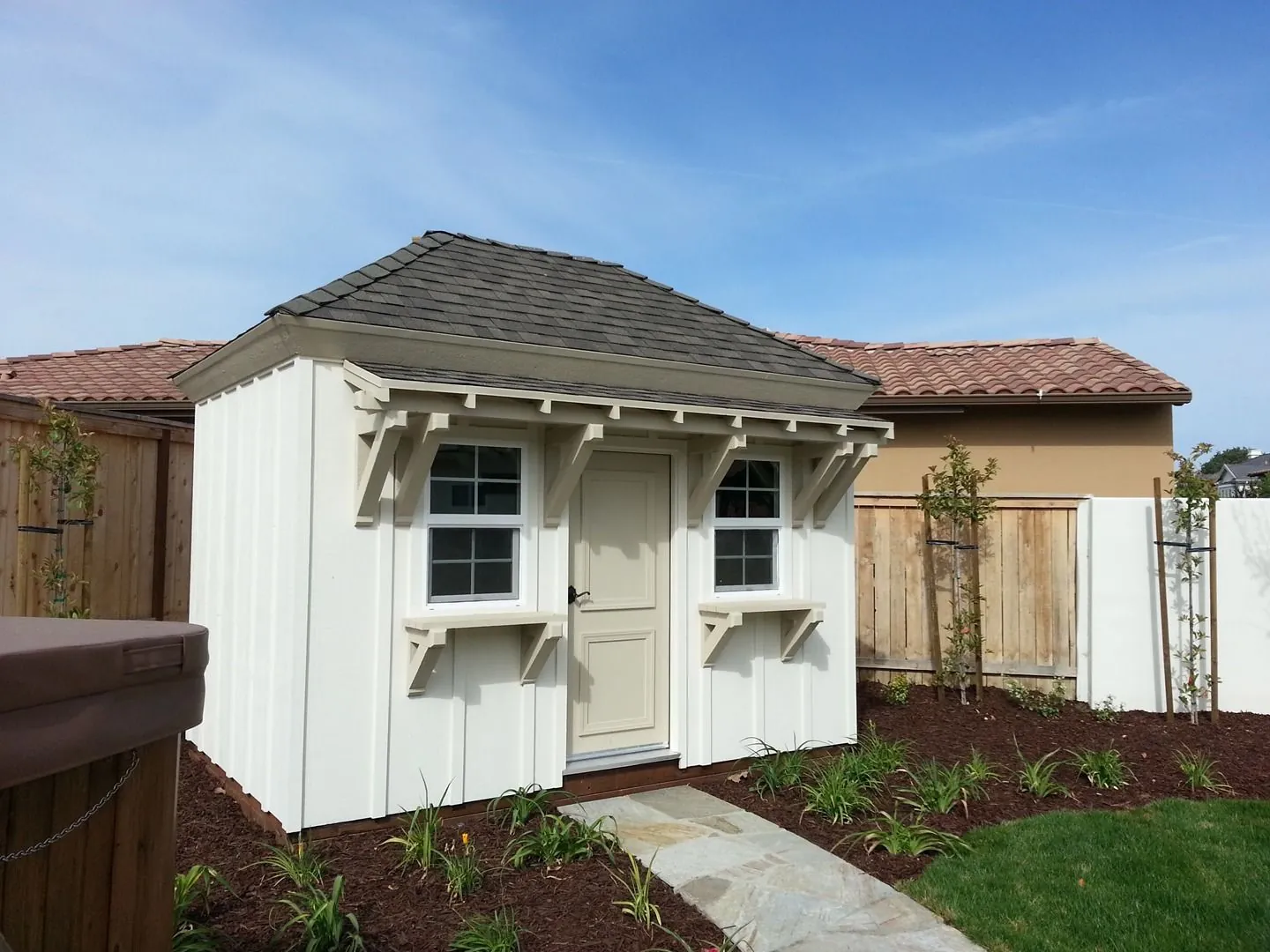
The City’s Low Impact Development List, Built on a Home Lot
Low impact development (LID) means copying the way an undisturbed site handles rain: slow it, spread it, let it soak in. The creek care guide lists eight residential LID examples. Here is what each one looks like when we build it:
- Disconnected downspouts. The leader is cut loose from any pipe that ties to the curb and redirected into a lawn, a bed or a gravel pocket.
- Vegetated swales. A shallow, planted channel with gentle side slopes that carries water slowly across the lot instead of racing it to the street.
- Interceptor trees. Canopy catches rain before it lands. New trees go where their roots will not lift paving or crowd a foundation.
- Rain gardens. A dished bed with loose, amended soil, sized to the roof area that drains to it and planted with species that tolerate both wet and dry spells.
- Alternative paving. Permeable pavers on an open-graded rock base, or gravel and decomposed granite, in place of a solid slab.
- Rain barrels and cisterns. Roof water is stored for the garden, with an overflow that still discharges to planting.
- Soil amendments. Compost worked into compacted ground so it absorbs water instead of sheeting it off.
- Infiltration techniques. Gravel-filled trenches or pockets that let collected water seep into the ground well away from the house.
The same guide lists what homeowners get from this: lower water bills, captured water for irrigation, salts flushed out of the root zone, less flooding downstream and a more interesting garden.
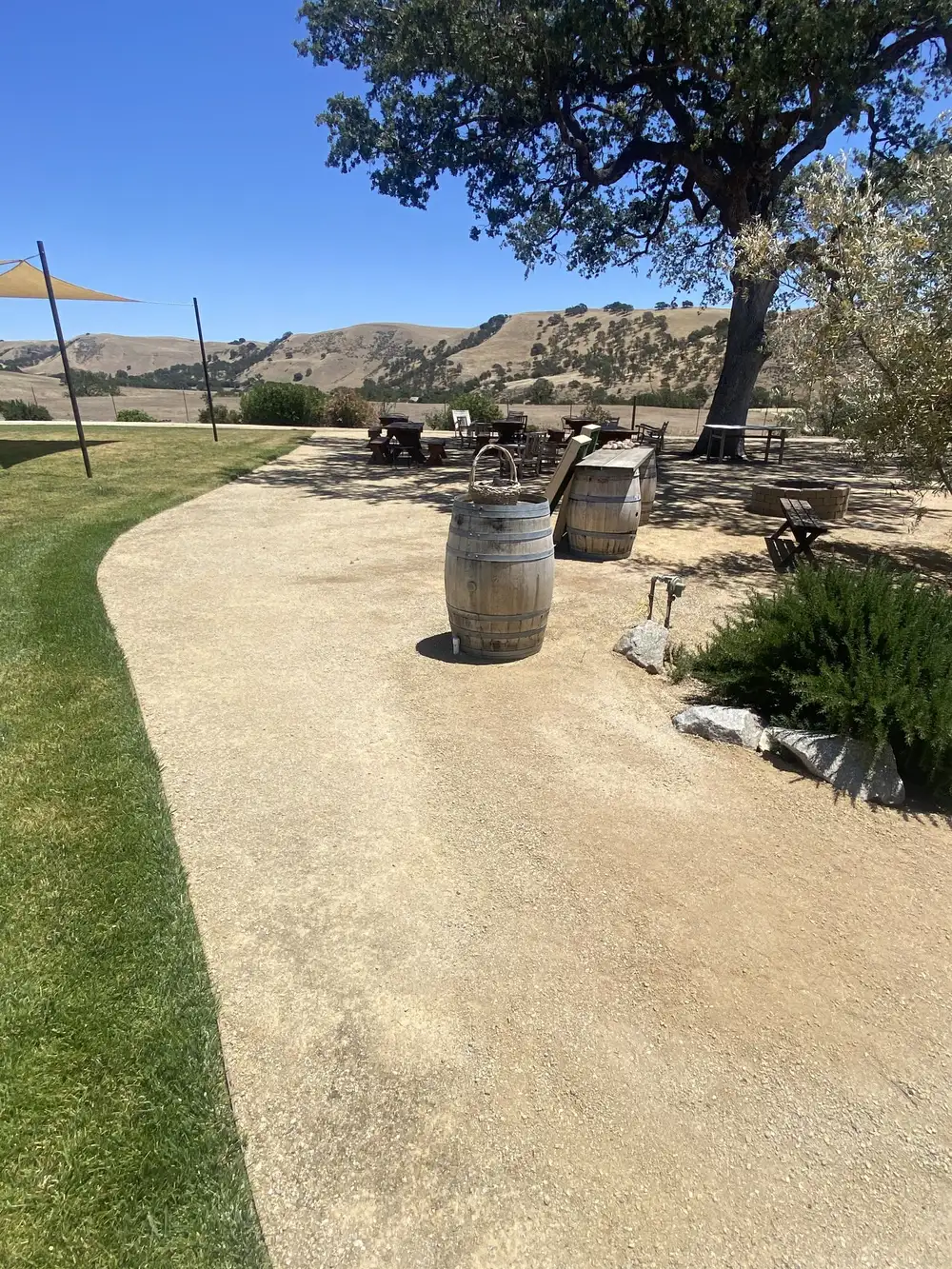
Sumped Beds, Loose Soil and Protected Roots
The City’s Performance Requirement 1 checklist reads like a short design brief for residential drainage. Among the measures it encourages:
- Build sumped planting areas instead of mounded ones, so beds hold irrigation and rain rather than shedding it onto paving
- Keep soil that will become planting areas from being compacted during construction, and amend it before planting
- Send driveway and downspout runoff at least 10 feet from foundations, toward beds and lawns
- Use permeable pavers for walkways, driveways and patios instead of concrete
- Protect existing trees by fencing the root zone, at minimum the shadow of the canopy at high noon
- Capture roof water in cisterns or rain barrels for reuse
We follow those points on our own jobs even when a project is too small to trigger the stormwater plan. In practice that means staging materials on plywood or paving rather than on future beds, ripping and composting compacted soil, setting bed edges a couple of inches below adjacent walks, and keeping trenches outside the fenced root zone of mature oaks and sycamores.
Lots Along a Creek
Plenty of Arroyo Grande lots back onto a creek or a drainage. The creek care guide notes that most creek-adjacent owners hold title to the creek centerline and are responsible for upkeep, including fallen trees and bank protection. City setbacks, measured from top of bank or the edge of riparian vegetation, do not allow impermeable surfaces: 35 feet along Arroyo Grande and Tally Ho creeks, 50 feet along Meadow and East Fork Meadow creeks, and 25 feet along other creeks and drainages. Properties in flood-prone areas carry added requirements.
Work on the bank itself is a different world. The guide points owners to the California Department of Fish and Wildlife (Lake and Streambed Alteration permits), the Central Coast Regional Water Quality Control Board (401 certification), the U.S. Army Corps of Engineers (404 permits) and NOAA Fisheries, because steelhead, a threatened species, start their lives in Arroyo Grande Creek. If a fallen tree creates a flooding or safety hazard, the guide lists Public Works at 805-473-5460. We keep our landscape work on the upland side of the setback, use permeable surfaces near it, and leave bank and channel work to the owner and those agencies. We also avoid plants the guide flags as invasive near creeks, such as ivy, iceplant, periwinkle, giant reed and pampas grass.

Permits and Paperwork
Most residential drainage jobs are small, but a few thresholds matter:
- Grading. The City’s grading ordinance, Chapter 13.24 of the Municipal Code (text as presented for adoption in the February 25, 2014 City Council packet; confirm current wording with the City), requires a permit when earthwork totals more than 50 cubic yards, or more than 20 cubic yards that alters a drainage way or watercourse. Quantities are added up across the whole project, and a job cannot be split up to dodge the permit. Exempt work still needs erosion and sediment controls, and anything that creates a hazard to property or a drainage channel is not exempt.
- Grading permit details. The engineering grading permit application asks for the flood hazard zone, the City drainage zone, cut and fill quantities, and often grading plans, a site and drainage report and a geotechnical report. Its standard conditions call for 48 hours’ notice to the Engineering Inspector before work and an Underground Service Alert ticket at least two working days before digging.
- Stormwater plan. Under the Stormwater Plan Application, a single-family project that creates or replaces 2,500 square feet or more of impervious surface meets PR1 site design measures at minimum; under that size, the owner files the PCR Waiver Request Form. Disturbing an acre or more brings a state SWPPP, per the City’s construction stormwater page.
Questions on permits go to the Community Development Department at 805-473-5420, and stormwater questions to stormwater@arroyogrande.org. Paso Robles Landscaping holds CSLB #986950. We are landscape contractors, not civil or geotechnical engineers: slope stability, retaining walls over code limits, sites in a mapped flood zone and anything that needs a drainage report get an engineer’s design first, and we build to it. The City makes the final call on any permit.
Keeping Mud Out of the Gutter During the Job
The City’s erosion and sediment control brochure requires construction site controls to follow the CASQA handbook or an equivalent, and the outreach page warns that both the contractor and the homeowner can be held liable if construction waste reaches the storm drain. On drainage jobs we:
- Cover soil and gravel piles ahead of any forecast rain
- Sweep or vacuum spilled soil instead of hosing it off
- Keep tires from tracking mud into the street, using a rocked entry on longer jobs
- Rinse concrete tools only into a lined washout
- Repair silt fence, wattles or covers right away if they get damaged
- Seed or mulch exposed ground before we leave
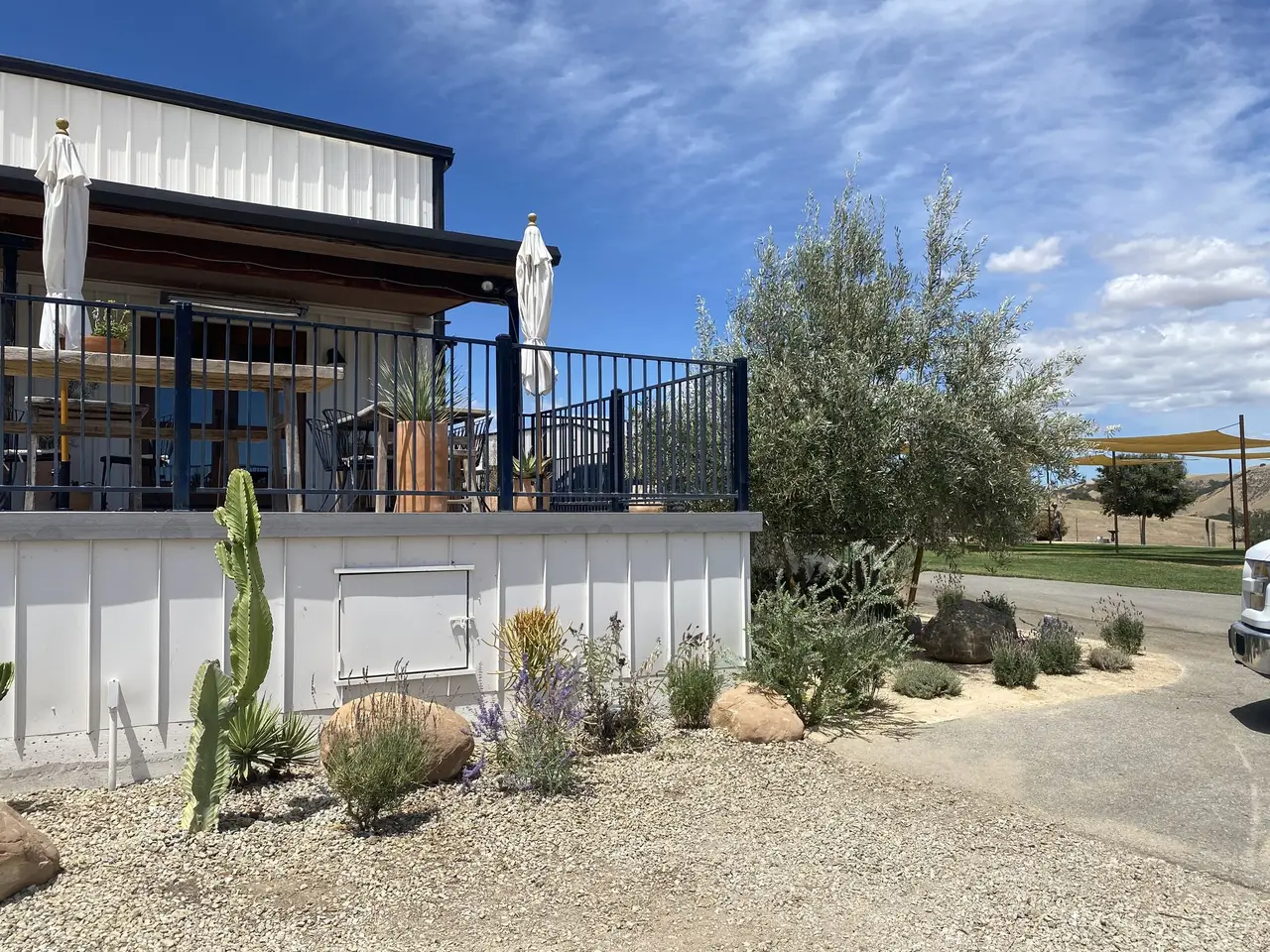
Water Use After the Rains
A drainage fix and a water-use fix often go together. The City’s water conservation page lists excessive gutter runoff as prohibited, asks that driveways and patios not be washed down, and lays out an irrigation schedule: no watering from 10 a.m. to 4 p.m., even-numbered addresses on Mondays and Thursdays, odd-numbered addresses on Tuesdays and Fridays, no watering on Wednesdays, and weekends open to all. The page notes these are currently encouraged rather than mandatory after the 2023 emergency was lifted. Swapping lawn for low-water planting also cuts runoff; the City’s incentive programs page describes its Cash for Grass Program for water customers who replace turf, and our lawn replacement page covers the planning side.
Keep Planning Your Arroyo Grande Yard
Drainage usually touches other parts of the yard. These guides cover the next pieces:
- Retaining walls in Arroyo Grande
- Concrete driveways and walkways in Arroyo Grande
- Irrigation in Arroyo Grande
- Outdoor living spaces in Arroyo Grande
- Decks in Arroyo Grande
- Yard drainage in San Luis Obispo
- Yard drainage in Paso Robles
- Yard drainage in Nipomo
- Yard drainage in Pismo Beach
- Yard drainage in Avila Beach
- Yard drainage in Morro Bay
- Yard drainage in Cayucos
- Yard drainage in Grover Beach
- Yard drainage in Oceano
- Landscaping in Arroyo Grande
Every community we cover: the San Luis Obispo County service area hub.
Frequently Asked Questions
Where should downspouts drain on an Arroyo Grande lot?
Into planting, not the street. The City’s PR1 checklist asks that roof and driveway runoff go at least 10 feet away from foundations, toward beds and lawns where it can soak in. We run solid pipe from each downspout to a rain garden, a gravel pocket or a lawn edge, with an overflow route for big storms.
Do I need a City permit to regrade my yard?
Not always. Under the grading ordinance, Chapter 13.24, a permit is needed when earthwork totals more than 50 cubic yards, or more than 20 cubic yards that alters a drainage way or watercourse. Exempt grading still needs erosion and sediment controls. Community Development (805-473-5420) can confirm for a specific lot.
Will a new patio trigger a stormwater plan?
Only on larger projects. A single-family project that creates or replaces 2,500 square feet or more of impervious surface must meet the City’s PR1 site design measures; smaller projects file a PCR Waiver Request Form. Permeable paving designed to infiltrate is left out of the impervious total.
Can I pave or build near the creek behind my house?
The City creek setbacks do not allow impermeable surfaces within 35 feet of Arroyo Grande and Tally Ho creeks, 50 feet of Meadow and East Fork Meadow creeks, or 25 feet of other creeks and drainages. Work on the bank may need state and federal permits. We keep landscape work upland and use permeable surfaces.
What is a sumped planting bed?
A bed set slightly lower than the paving or lawn around it, so rain and sprinkler water collect in the soil instead of running off. The City’s PR1 checklist recommends sumped beds over mounded ones. We pair them with loosened, composted soil and plants that handle short wet spells.
Water Pooling in Your Arroyo Grande Yard?
Tell us where it collects and where it comes from; we will walk the lot, trace the flow and give you a free written estimate.
Call 805-712-4440 Get a Free Estimate
Paso Robles Landscaping · 1345 Riverside Ave, Paso Robles · Licensed contractor, CSLB #986950 · Serving all of San Luis Obispo County