
Yard Drainage in Atascadero
Paso Robles Landscaping solves yard drainage problems for Atascadero homes: regrading so the ground falls away from the house, burying downspout leaders out to rain gardens or gravel basins, building cobble dry creeks and swales, swapping solid slabs for permeable paving, and stabilizing slopes before the wet months. We plan each job around the City's drainage, grading and creek rules and its guidance to keep anything but rainwater out of the street. Call 805-712-4440 or reach us through the contact page to book a visit.

Atascadero Drainage and Grading Rules at a Glance
| Topic | What the City or AMWC says | Source (checked Oct 13, 2026) |
|---|---|---|
| Drainage plan | Needed with a permit or planning application when a project creates more than 1,000 sq ft of impervious surface, has local ponding, sits within 50 ft of a mapped watercourse, or is on slopes steeper than 10% | Municipal Code 9-4.147 |
| Grading plan | Grading over 50 cubic yards needs a grading and drainage plan; call Planning Services at 805-461-5035 before any grading | Residential intake checklist / Work Exempt handout |
| Engineered grading | 500 cubic yards or more, slopes of 20% or more, or a geologic or flood hazard overlay: plan by a registered civil engineer | Municipal Code 9-4.141 |
| Wet season | Erosion control plan when grading that may affect a neighbor is left unfinished between October 15 and April 15 | Municipal Code 9-4.144 |
| Creeks | Watercourse-adjacent area is 20 ft from a creek (100 ft from the Salinas River); rain gardens and bioswales are allowed there with ministerial approval | Municipal Code 9-4.171 and 9-4.175 |
| Sprinkler runoff | Irrigation that lets water flow onto neighboring property, unplanted ground or hardscape is prohibited | AMWC Policy 1.1.1 |
Why Atascadero Yards Flood, Wash Out or Stay Soggy
The City's stormwater brochure points out that the town has more than 70 miles of "blue line" streams and that most of them run across private property, on top of Atascadero Creek, Graves Creek, Boulder Creek, the Salinas River and Atascadero Lake. All of it ultimately drains to Monterey Bay. Silt and mulch washed off a yard can end up in a creek.
The usual culprits: soil and mulch piled against siding, gutters that empty at a corner, a slope above the house with nothing to catch sheet flow, or a patio that was never pitched.
What the City Recommends for Homeowners
The same brochure lists practical steps for a stormwater friendly yard, and they line up with good drainage design:
- Redirect downspouts so they flow into garden and landscape areas
- Keep water on site with a rain garden, described as a landscaped depression that collects stormwater and feeds plants
- Use rain barrels to capture roof runoff
- Cut back paved surfaces and replace them with trees, shrubs and ground covers
It also notes that storm drain water reaches creeks without treatment, and nothing but water may be dumped into a drain.
What Can Legally Leave Your Lot
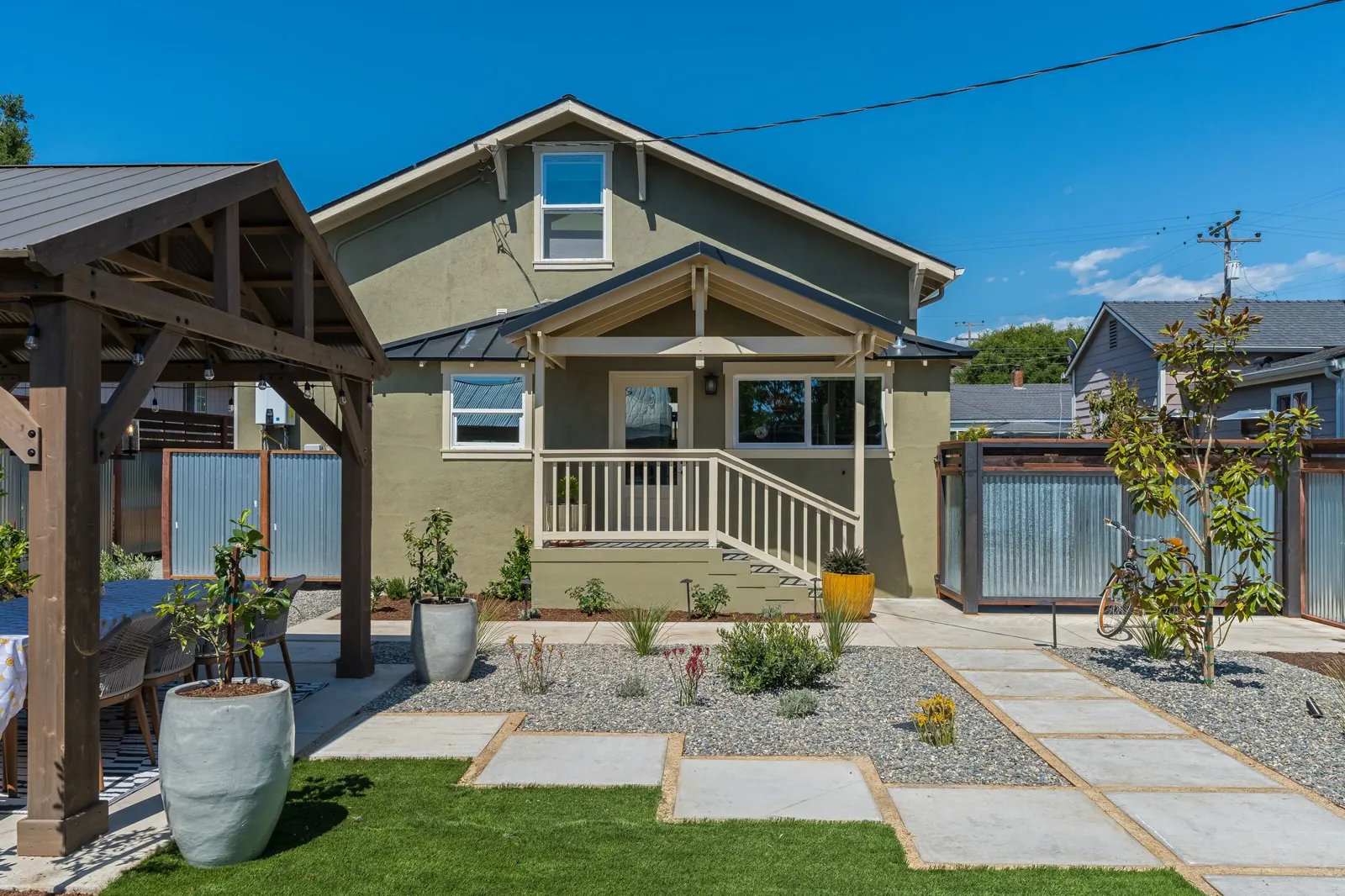
Chapter 13 of the City's stormwater pollution prevention ordinance draws the line. Among the discharges it exempts from the general ban are non-excessive, incidental runoff from landscape irrigation that follows the City's water conservation rules, foundation and footing drains, and residential car washing. Dechlorinated pool water is allowed only with prior approval from the City Manager, and the City's engineering page tells residents to call the Stormwater Engineer at 805-470-3462 before draining a pool.
Prohibited outright, among others: water from pressure washing driveways, steps and walls, washout from concrete trucks, and slurry from saw cutting. We contain cutting slurry and wash water on our jobs.
When a Drainage Plan Is Required
The Municipal Code's drainage standards exist to limit flooding and erosion on a project and to protect neighboring and downstream properties. Under Section 9-4.147, a drainage plan goes in with the building permit, grading permit or planning application for a project that:
- Disturbs more than one acre
- Will result in more than 1,000 square feet of impervious surface
- Is subject to local ponding because of soil conditions and no defined drainage channel
- Is in an area the City Engineer has flagged for past flooding or erosion, or in a Flood Hazard Overlay Zone
- Disturbs land or places structures within 50 feet of a mapped watercourse
- Involves hillside development on slopes over 10% or driveways over 12%
The plan itself shows how surface water flows onto and off the site, existing and finished contours, pad, floor and street elevations, existing and proposed swales, ditches and berms, any sumps, basins, culverts or drop inlets, estimates of existing and added runoff, and erosion control. It is prepared by an appropriately licensed professional and approved by the City Engineer. A new patio plus driveway can pass 1,000 square feet quickly, so we flag it early.
Grading: Plans, Engineers and Slope Limits
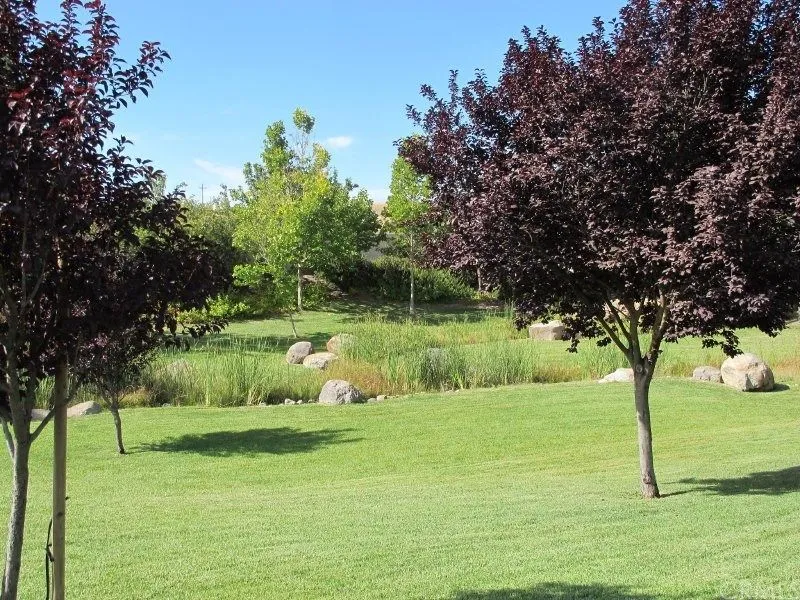
The City's Work Exempt from Permit handout is direct: contact Planning Services at 805-461-5035 before starting any grading, because grading can fall under several sets of federal, state and local rules. Its residential intake checklist adds that grading over 50 cubic yards calls for a grading and drainage plan showing existing topography, cut and fill quantities in cubic yards, the average existing slope, proposed finished grade and a finished floor benchmark, plus a separate sediment and erosion control sheet.
Under the Municipal Code, grading of 500 cubic yards or more, on slopes of 20% or more, or inside a Geologic or Flood Hazard Overlay Zone is engineered grading, with a plan certified by a registered civil engineer. Other standards in Section 9-4.143 shape how a drainage job is built:
- Grading is kept to a minimum and balanced on site where possible to avoid importing or exporting soil
- Cut and fill slopes stay at 3:1 or flatter, with 2:1 allowed to protect native trees or natural drainage features, shrink the disturbed area, or keep grading inside the property
- Watercourses are not obstructed unless an alternate drainage facility is approved, and excavated soil is not stockpiled where high water can carry it off
- Grading must not send erosion, sediment or dust onto neighboring property or rights-of-way
The same handout notes that retaining walls up to 4 feet, measured from the bottom of the footing, are exempt from a building permit unless they support a surcharge. Many drainage fixes include a short wall, so we check height and loading before we design one.
Erosion Control Through the Wet Months
Section 9-4.144 requires a sedimentation and erosion control plan whenever land is disturbed for a non-agricultural purpose, when grading that may affect an adjacent property will be underway or unfinished between October 15 and April 15, on slopes over 30%, and within 50 feet of a mapped watercourse. Listed measures include temporary mulch or seeding, interceptor ditches above cut and fill slopes, sediment traps and spreading runoff over undisturbed ground. Where a plan is required, disturbed ground is revegetated within 30 days after grading wraps up unless it is covered by approved paving. We sequence work so slopes are stabilized before storms rather than left bare.
Working Near a Creek or Blue-Line Stream
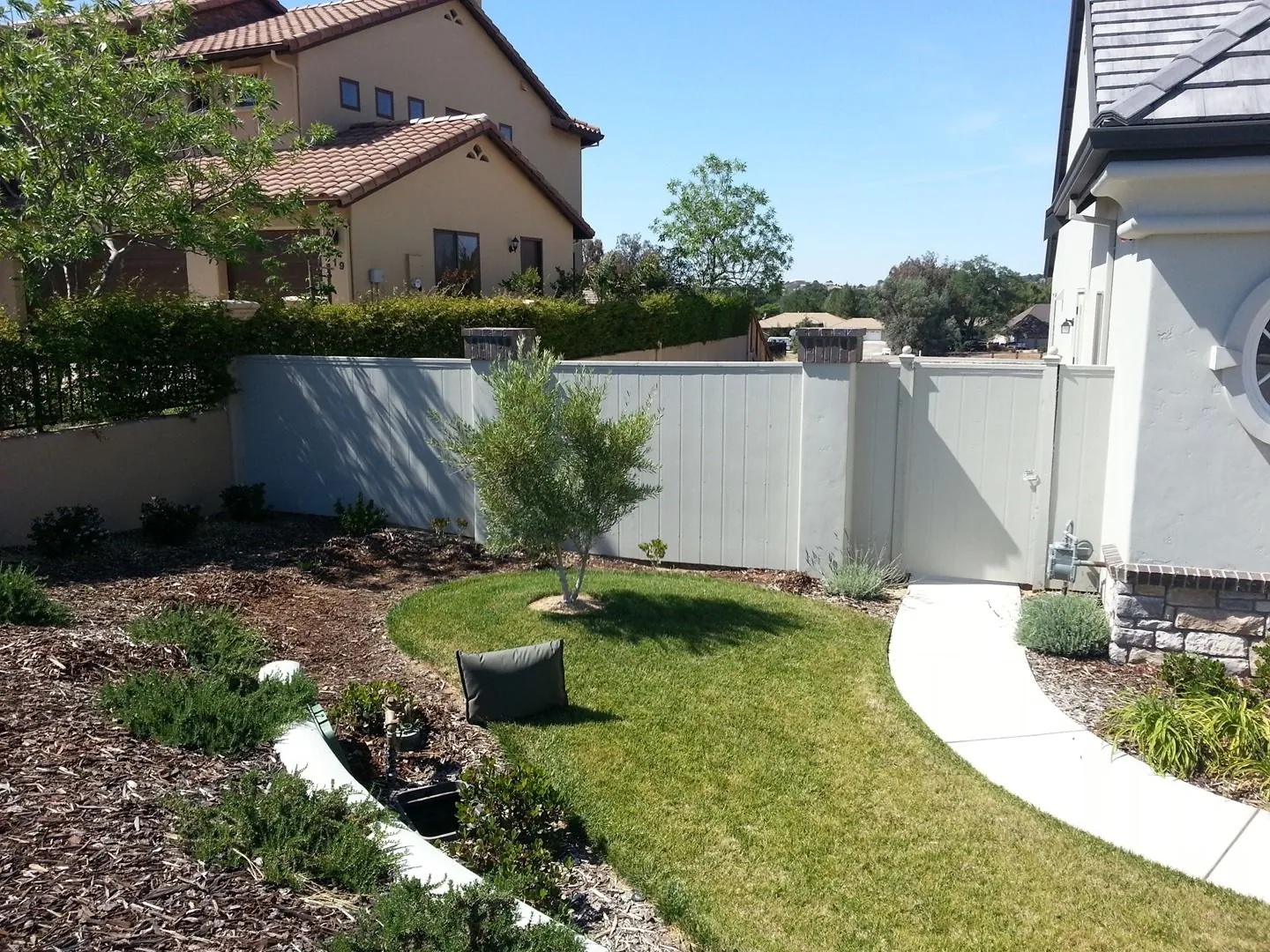
The Municipal Code treats land within 100 feet of the Salinas River, and within 20 feet of any other major or minor watercourse or jurisdictional wetland, as a watercourse-adjacent area, measured from the top of bank. The named major watercourses are the Salinas River and Atascadero, Graves, Paloma and Boulder creeks. Under Section 9-4.175, a short list of items can go in that strip with ministerial approval, as long as the Community Development Director confirms no resource is harmed and nothing extends past the top of bank:
- Bioswales, rain gardens and similar non-structural stormwater features built from natural materials and planted with non-invasive species
- Landscape walls under three feet tall and walkways up to six feet wide
- Patios that encroach no more than 200 square feet, within a cap on how much of the creek frontage patios, decks and gazebos can cover
Anything outside that list, or anything that could affect the creek, moves to a discretionary Precise Plan, and State or Federal agencies may also have a say.
Sprinklers, Runoff and Rainwater Tanks
Atascadero Mutual Water Company's Policy 1.1.1, Wise and Beneficial Use of Water (revised July 8, 2026, on the AMWC publications page), prohibits irrigation that lets water run onto adjacent property, non-irrigated areas or hardscape, overhead watering between 10 a.m. and 5 p.m., and watering during or within 48 hours after measurable rain. Our Atascadero irrigation page covers controller and drip fixes in more detail.
For owners who want to store roof water, the AMWC rebates page lists a Rainwater Harvesting Rebate for a tank or cistern of at least 100 gallons. Its application says the site must be pre-approved by AMWC conservation staff before any work starts, with inspections before and after, and the program is not retroactive. The City handout also lists on-grade water tanks up to 5,000 gallons, with a height no more than twice the width, among items exempt from a building permit. We plumb tank overflow to a rain garden or gravel basin so a full tank never dumps against the house.
How We Approach an Atascadero Drainage Job
We walk the property, ideally in or after a storm, to see where water arrives, stalls and leaves, then lay out a plan: finished grades, where each downspout discharges, the route and size of any dry creek or swale, receiving beds or rain gardens, and any paving that should become permeable. We finish with a water test so you can watch it work, and we tell you up front if a grading, drainage plan or creek rule applies.
We are landscape contractors, not civil engineers or City inspectors. Cracked foundations, moving retaining walls and slope failures need a licensed engineer first; we then build the landscape and drainage portion to the engineer's plan and to City requirements.
Drainage Work We Do in Atascadero
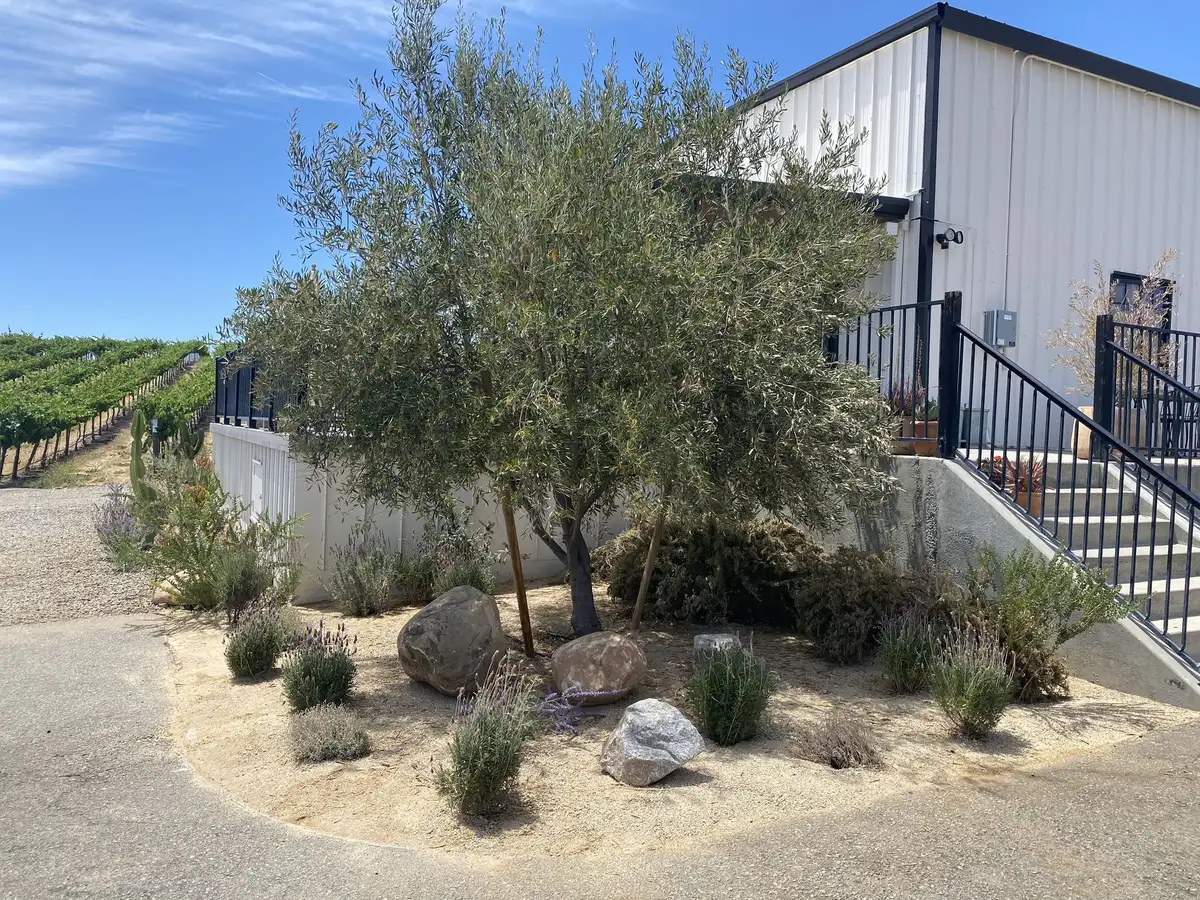
Pick one trouble spot or have us plan the whole property:
- A site visit in or after a storm to trace where water enters, collects and exits the lot
- Reshaping beds, paths and lawn so finished grade carries water off the foundation
- Solid downspout leaders run underground to a rain garden, gravel basin or pop-up emitter
- Rain gardens planted with non-invasive, drought-tolerant species
- Cobble and river-rock dry creeks that carry runoff across the yard slowly
- Pavers on an open-graded base, gravel or decomposed granite in place of solid concrete
- Temporary and permanent erosion control on cut slopes: mulch, seeding and interceptor swales
- Low retaining walls with drain rock behind them where a slope needs holding
- Sprinkler and drip corrections so irrigation stops running onto paving
More Atascadero Guides
Other pages for Atascadero projects:
- Hardscape in Atascadero
- Concrete driveways and walkways in Atascadero
- Paver, flagstone and covered patios in Atascadero
- Irrigation in Atascadero
- Artificial turf in Atascadero
- Yard drainage in Paso Robles
- Yard drainage in Templeton
- Yard drainage in San Luis Obispo
- Yard drainage in Avila Beach
- Yard drainage in Morro Bay
- Yard drainage in Cayucos
- Yard drainage in Grover Beach
- Yard drainage in Oceano
- Landscaping in Atascadero
- Templeton
- Santa Margarita
Every town we cover is listed on our San Luis Obispo County service area page.
Frequently Asked Questions
Do I need a drainage plan for yard work in Atascadero?
Only for certain projects. Municipal Code 9-4.147 requires a drainage plan with the permit or planning application when a project adds more than 1,000 square feet of impervious surface, has local ponding, sits within 50 feet of a mapped watercourse, is on slopes over 10%, or meets the other listed triggers. Many small yard fixes do not.
How much grading can I do before the City needs a grading plan?
The City's residential intake checklist says grading over 50 cubic yards needs a grading and drainage plan, and its Work Exempt handout asks you to contact Planning Services at 805-461-5035 before any grading. Grading of 500 cubic yards or more, or on slopes of 20% or more, needs a civil engineer.
Can I put a rain garden near the creek behind my house?
Often, yes. Within the 20-foot watercourse-adjacent area (100 feet from the Salinas River), Municipal Code 9-4.175 allows bioswales and rain gardens built with natural materials and non-invasive plants through ministerial approval, provided nothing goes past the top of bank and the City confirms no resource is harmed.
Is sprinkler water running into the street allowed?
AMWC Policy 1.1.1 prohibits irrigation that lets water flow onto neighboring property, non-irrigated areas or hardscape such as walks and streets. The City's stormwater ordinance only exempts non-excessive, incidental irrigation runoff that follows water conservation rules.
Can you fix a cracked foundation or a failing slope?
Those need a civil or geotechnical engineer first. Once there is an engineered plan, we build the landscape side of it: grading, swales, downspout lines, drains, permeable paving, planting and low walls.
Get Ahead of the Rainy Season
Show us where water pools or washes out on your property, and we will set up a free walk-through and estimate.
Call 805-712-4440 Get a Free Estimate
Paso Robles Landscaping · 1345 Riverside Ave, Paso Robles · Licensed contractor, CSLB #986950 · Serving all of San Luis Obispo County
Related: Retaining walls in Atascadero